Sattu Ke Parathe And Cucumber And Tomato Raita

Sattu Ke Parathe And Cucumber And Tomato Raita

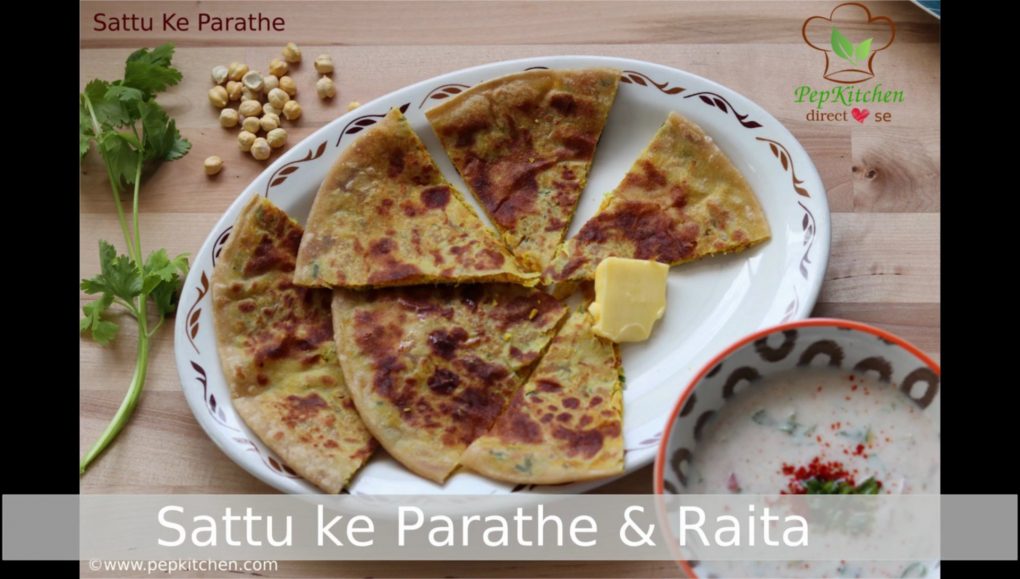
“Sattu ke parathe” is a very popular dish from Bihar.  It is an Indian flatbread stuffed with spicy Sattu mixture and shallow fried in a pan. Sattu is prepared by dry roasting grains (barley, wheat, sorghum) or grams, mainly Bengal gram. Traditionally, sattu is prepared by roasting the grains or grams on the sand in an iron wok. Afterwards, it is sieved and then ground to a fine flour. It is an important source of proteins in a vegetarian diet. It is consumed mainly in the states of Bihar, Punjab, Madhya Pradesh, UP, and West Bengal in India. The people of this region are mostly farmers and are hard working. They require the energy for working under the sun throughout the day. Sattu is considered very healthy and is a good source of protein, calcium, magnesium, iron, and fiber. They drink “Sattu sharbat” (It is a drink prepared in water with sattu). It can be prepared sweet or salty as per your preference. Jaggery is added to the drink along with sattu to make it sweet. For a salty taste, salt, pepper, chat masala, coriander and lemon juice can be added to the juice. This drink is considered as the “energy drink” or “protein shake” by these hard-working people. It is natural, inexpensive and has a high protein content. It has immense cooling property for the body and is thus a refreshing summer drink. It is good for the farmers and laborers who work under the sun. You can find vendors in this region selling this healthy drink. Many people also prefer to consume sattu by mixing it with buttermilk.

Sattu is low in glycemic index and hence is beneficial for the person having diabetes. Since it is good for the development of muscle mass in the body, it is very good for growing children. The older generation believes in giving two tbsp of sattu to growing children daily. It is good for a pregnant lady and also for a person recovering from surgery or disease. Sattu is a boon to the development of the body from kids to adults and aged.

The Various kinds of dishes made from sattu are sattu kachori, litti choka, upma, porridge and sattu ke laddu.

Sattu is very cheap, but we do not notice its value and run after the expensive brands sold in the market.

When I came to know about the benefits from sattu, I wanted my family to like it and get the nutritional benefit from it. Since everyone in my family loves different types of parathas, I thought of making sattu ke parathe for them. I am happy my family enjoys this paratha and It is in demand at my home nowadays. I often make them for a heavy breakfast, brunch or sometimes as an after-school snack for my son.

Usually, mustard oil is added to the stuffing because It gives a unique flavor to the dish.  If you do not have mustard oil you can either put mango pickle masala that has mustard oil or  masala from the pickle along with normal oil. I have not put mustard oil.

It goes well with any of these – cucumber and tomato raita (dip prepared with yogurt, cucumber, tomato and spices), butter, pickle, chutney, sauce or plain yogurt.

I am sharing with you the recipe for preparing this quick and tasty raita. It takes just few minutes to make this raita. Sattu ke parathe along with this raita is a complete meal for lunch or dinner.

Sattu is readily available in the stores. However, you can prepare at home by grinding the roasted Bengal gram into a smooth powder. I always make it at home as and when required.

Here are a complete video and recipe for preparing the delicious and healthy protein packed “sattu ke parathe” and cucumber and tomato raita.

Enjoy and make this healthy parathas and raita for your family and friends.

Sattu Ke Parathe And Cucumber And Tomato Raita
Print Recipe
5 from 2 votes

Sattu Ke Parathe And Cucumber And Tomato Raita

Sattu ke parathe is an Indian flatbread stuffed with spicy Sattu mixture and shallow fried in a pan. It is a very healthy, tasty and protein rich recipe. For a complete meal serve it along with a quick raita made by mixing yogurt with cucumber, tomato, corainder and spices. It can also be served with butter, pickle or chutney or your choice.
Prep Time15 minutes
Cook Time30 minutes
Total Time45 minutes
Course: Breakfast, dinner, Main Dish, Snack
Cuisine: bihar, Indian
Servings: 4 paratha
Calories: 415kcal

Ingredients

For Dough

Sattu sutffing

raita

Instructions

For dough

  • Add whole wheat flour, salt and oil in the bowl. Mix well.
    Sattu Ke Parathe And Cucumber And Tomato Raita
  • Add water and start kneading a soft and smooth dough. Knead well for 4-5 minutes until smooth and soft dough forms.
    Sattu Ke Parathe And Cucumber And Tomato Raita
  • Sattu Ke Parathe And Cucumber And Tomato Raita
  • Apply oil and smoothen the dough. Cover it and rest it for 20 minutes
    Sattu Ke Parathe And Cucumber And Tomato Raita

For Sattu Filling

  • In a mixture/grinder jar, add the roasted bengal gram (bhuna chana).
    Sattu Ke Parathe And Cucumber And Tomato Raita
  • Grind it to a smooth powder.
    Sattu Ke Parathe And Cucumber And Tomato Raita
  • Remove sattu in the bowl. Add oil, carom seeds, pickle masala, dry mango powder, turmeric powder, and salt as per taste.
    Sattu Ke Parathe And Cucumber And Tomato Raita
  • Mix them well.
    Sattu Ke Parathe And Cucumber And Tomato Raita
  • Add the grated or finely chopped onions, finely chopped coriander and green chili. Mix well.
    Sattu Ke Parathe And Cucumber And Tomato Raita
  • Add lime juice and mix well. The sattu mixture will start to combine.
    Sattu Ke Parathe And Cucumber And Tomato Raita
  • If require add a tbsp of water gradually and combine the mixture till dough is formed.
    Sattu Ke Parathe And Cucumber And Tomato Raita
  • Sattu Ke Parathe And Cucumber And Tomato Raita
  • Divide the mixture into foour parts. Make balls from it.
    Sattu Ke Parathe And Cucumber And Tomato Raita

Making Paratha

  • After 2o minutes knead the dough again and make balls from the dough.
    Sattu Ke Parathe And Cucumber And Tomato Raita
  • Take a round ball, dust it with flour and flatten it.
    Sattu Ke Parathe And Cucumber And Tomato Raita
  • Roll into a small dish and apply oil over it. Put the sattu mixture ball over it.
    Sattu Ke Parathe And Cucumber And Tomato Raita
  • Bring the edges of the disc to the center and then pinch out the excess dough.
    Sattu Ke Parathe And Cucumber And Tomato Raita
  • Sattu Ke Parathe And Cucumber And Tomato Raita
  • Roll and flatten the stuffed ball. Dust it with flour and roll into a big circle.
    Sattu Ke Parathe And Cucumber And Tomato Raita
  • Heat a pan. Put the rolled paratha on the pan.
    Sattu Ke Parathe And Cucumber And Tomato Raita
  • Flip when bubbles are seen and apply oil over it . Spread the oil and then flip the paratha.
    Sattu Ke Parathe And Cucumber And Tomato Raita
  • Cook till golden and crispy from both sides
    Sattu Ke Parathe And Cucumber And Tomato Raita
  • The sattu paratha is ready to serve.
    Sattu Ke Parathe And Cucumber And Tomato Raita

For making raita/yogurt dip

  • Take yogurt in a bowl.
    Sattu Ke Parathe And Cucumber And Tomato Raita
  • Add chopped cucumber, chopped tomato, chopped corainder, red chili powder, cumin powder, rock salt .
    Sattu Ke Parathe And Cucumber And Tomato Raita
  • Mix well and raita is ready to serve.
    Sattu Ke Parathe And Cucumber And Tomato Raita
  • Sattu Ke Parathe And Cucumber And Tomato Raita

Serving

  • Cut Sattu paratha into wedges and serve it hot with raita and butter.
    Sattu Ke Parathe And Cucumber And Tomato Raita

Nutrition

Calories: 415kcal | Carbohydrates: 43g | Protein: 12g | Fat: 23g | Saturated Fat: 5g | Polyunsaturated Fat: 10g | Monounsaturated Fat: 7g | Cholesterol: 11mg | Sodium: 615mg | Potassium: 677mg | Fiber: 9g | Sugar: 8g | Vitamin A: 2350IU | Vitamin C: 22.3mg | Calcium: 160mg | Iron: 3.1mg

Palak Dal /Spinach Lentil Curry

Palak Dal /Spinach Lentil Curry

Hyderabadi Palak Dal /Spinach Lentil Curry

Dal is a soup made from various lentils in the different regions of India.  It is tempered with oil, spices and sometimes ginger garlic, chili, onions, and tomatoes are added to enhance the flavor of dal.

Every region of India has a different preparation of dal, even if it uses the same lentil. The texture, consistency, and taste of the dal vary in different houses. Even if the ingredients and method of preparation are same, the taste of dal varies from person to person who is making it. Some people like to have their dal thin as soup and others prefer having it thick as curry. The flavor of the dal is dependent on the tempering.

When the dal is tempered with oil and spices, it draws the attention of the person passing near it and activates his taste buds. I remember when I was small I use to run to the kitchen to smell the dal when my mother used to pour the tadka (tempering) on the dal. I simply could not wait to have that “Maa ki haathon ki dal”(made by mother with love).

There are various recipes for making dal – Dal Tadka, Gujarati Khatti Meethi dal, Patal Bhaji (lentils cooked with green leafy vegetables with coconut), Dal Makhani, Hyderabadi dal.

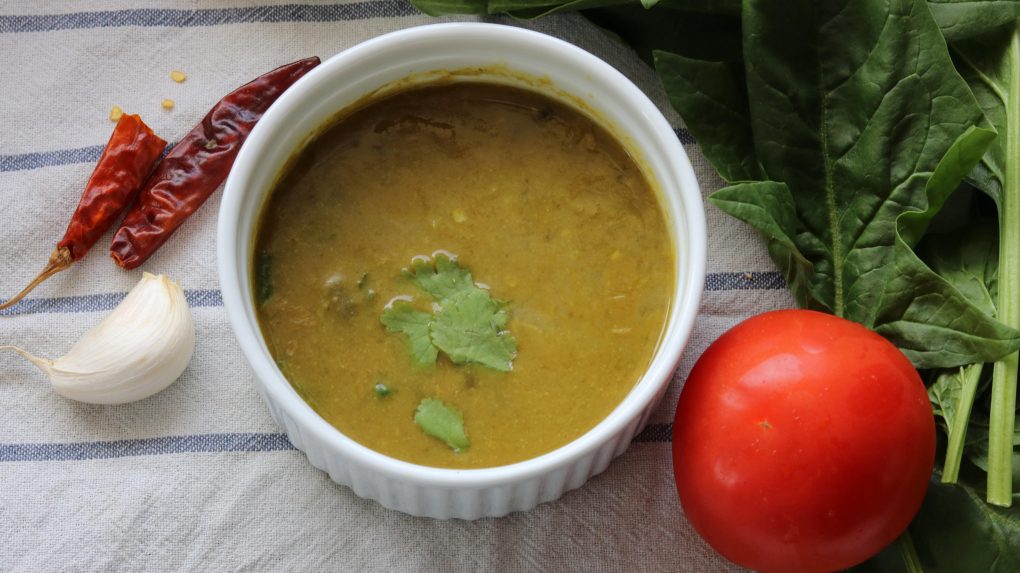
I am sharing with you  Palak Dal which my mother makes. She also calls it Hyderabadi Palak dal.  I simply love this dal as it has flavors of mixed lentils -pigeon peas (tuvar dal/arhaar dal), split bengal gram (chana dal), split green gram (moong dal without skin) and spinach along with whole spices, garam masala, green chili and ginger garlic paste, tomato and onions. Adding Kasuri methi to it enhances its flavor. I like the green colour of the dal. As everything is crushed while making the dal, my son also eats it happily.  I like to serve it with roti or jeera rice.

You can add tamarind pulp in place of lemon juice.

If you want to make it richer you can add butter while serving. When the guests are coming just prepare the dal in advance and when serving it pour the hot tadka (tempering) on it made with oil, cumin seeds, asafoetida, chopped garlic, green or red chili and serve. Your guests will be impressed.

So what are you waiting for just walk to the kitchen and prepare this mouthwatering, delicious and finger licking dal!!!


Palak Dal /Spinach Lentil Curry
Print Recipe
5 from 2 votes

Palak Dal /Spinach Lentil Curry

Palak Dal/spinach Lentil Curry is a curry cooked with lentils - pigeon pea (tuvar/arhaar dal), split bengal gram (chana dal), split green gram (moong dal without skin) and loaded with healthy spinach leaves. The tempering made with fresh green chili, ginger garlic paste along with whole spices enhances the flavor of the dal. It can be served with roti, naan, plain rice or jeera rice.
Prep Time15 minutes
Cook Time15 minutes
Total Time30 minutes
Course: dinner, Main Dish
Cuisine: Indian
Servings: 4 people
Calories: 228kcal

Ingredients

Instructions

  • Wash & soak the mixed lentils -pigeon peas (tuvar dal/arhaar dal), split bengal gram (chana dal), split green gram (moong dal without skin) for one hour.
    Palak Dal /Spinach Lentil Curry
  • In a pressure cooker, add the soaked and drained dal along with chopped onion, tomato and spinach. Add 3 cups of water and pressure cook for 4 high whistles and simmer for 2 more whistles.
    Palak Dal /Spinach Lentil Curry
  • Let the pressure cooker cool by itself. Remove the lid and now blend the mixture with hand blender or grind it in a mixture. Add 1 cup of water to the blended dal and keep aside.
    Palak Dal /Spinach Lentil Curry
  • In a big pan heat oil and ghee. Add the whole spices such as cloves, cinnamon and bay leaf. Add cumin seeds and let it crackle, add chopped green chili, dry red chili, and asafoetida. Add freshly grounded ginger and garlic paste.
    Palak Dal /Spinach Lentil Curry
  • Saute the paste till the raw smell goes away on medium heat. Add turmeric powder and coriander-cumin powder. MIx well and saute.
    Palak Dal /Spinach Lentil Curry
  • Add the blended dal mixture and let it boil for 3-4 minutes.
    Palak Dal /Spinach Lentil Curry
  • Add garam masala. Add kasuri methi (crushed in palms). Simmer for 3-4 minutes more till the flavors of garam masala and kasuri methi are absorbed.
    Palak Dal /Spinach Lentil Curry
  • Add lemon juice and mix well. The Hyderabadi Palak Dal is ready to serve.
    Palak Dal /Spinach Lentil Curry
  • Serve it hot with roti or rice of your choice.
    Palak Dal /Spinach Lentil Curry

Nutrition

Calories: 228kcal | Carbohydrates: 29g | Protein: 9g | Fat: 10g | Saturated Fat: 3g | Polyunsaturated Fat: 3g | Monounsaturated Fat: 2g | Cholesterol: 5mg | Sodium: 239mg | Potassium: 718mg | Fiber: 9g | Sugar: 5g | Vitamin A: 6250IU | Vitamin C: 40.4mg | Calcium: 130mg | Iron: 5mg

Sabudana Thalipeeth/ Sago pancake

Sabudana Thalipeeth/ Sago pancake

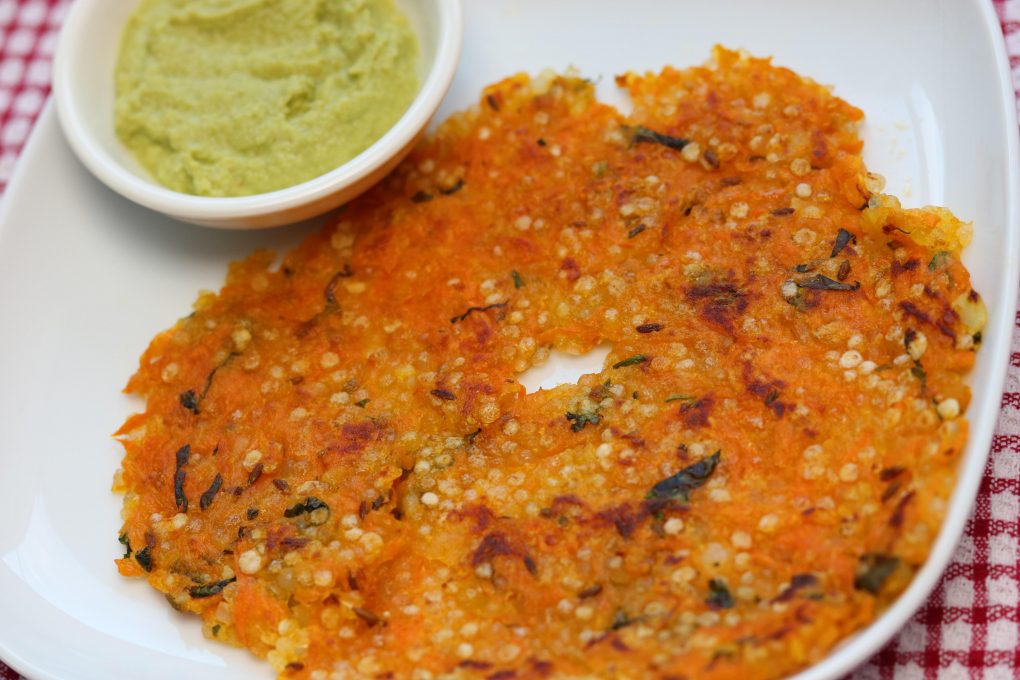
Sabudana thalipeeth is a dish made during fast/upwaas/vraat. It is very delicious and is made using soaked sabudana, potato, crushed peanuts, cumin seeds and ginger green chilies. It is cooked by applying ghee or butter till it is golden and crisp. It uses fewer spices but is yet full of flavors.

Thalipeeth is a popular dish in Maharashtra region of India. It is a savory multigrain pancake and is made from “Bhajanee” which is a flour mixture made by roasting different kinds of grains and legumes such as wheat, rice, jowar (sorghum), bajra (pearl millet), chana dal (gram) and urad dal (split black beans). The thalipeeth dough is prepared by adding onions, coriander, green chili along with cumin seeds, salt, and other spices. It is then directly pressed on the flat pan. It is cooked by applying ghee, oil or butter till both the sides become crisp and golden. It is served hot with pickle, curd or chutney.

I have used orange sweet potato while making the dish. It imparts nice taste and color to the thalipeeth. You can skip sweet potato and add only potato. The same mixture can be used to make sabudana wada. You can also use boiled and mashed raw bananas instead of potatoes.

I have made the thalipeeth using the traditional way of directly pressing them on the pan. Alternatively, you can first press it on a greased plastic sheet or butter paper and then flip it gently on the pan and cook.

It is a very easy, quick and tasty dish. It is also gluten-free. You can relish it for your regular breakfast, lunch, evening snack or dinner.


Sabudana Thalipeeth/ Sago pancake
Print Recipe
5 from 2 votes

Sabudana Thalipeeth/ Sago pancake

Sabudana thalipeeth/Sago pancake is made during fast. It is made with sabudana, boiled potato, sweet potato and roasted crushed peanuts. It is very quick, tasty and can be consumed even in regular breakfast, lunch or dinner. It is gluten free.
Prep Time10 minutes
Cook Time40 minutes
Total Time50 minutes
Course: Breakfast, dinner, Snack, upwaas (fast)
Servings: 8 thalipeeth
Calories: 301kcal

Ingredients

  • 250 g sabudana sago. I have used the mini sabudana available.
  • 1 cup Sweet potato grated and water squeezed. I have used the orange sweet potato as i like the taste and colour of it. You can use the white potato.
  • small potato boiled and mashed
  • 1 tbsp cumin seeds
  • 1/2 cup coriander washed and chopped
  • 1/2 cup peanut roasted and crushed
  • 1 tbsp ginger chili paste or as per taste.
  • 1 tbsp curry leaves washed and chopped finely
  • salt or (sindhav namak) as per taste
  • oil or ghee for making thalipeeth

Instructions

  • Wash the sabudana for 4-5 times till the water looks clear. Soak it in a flat vessel with just water filled on top. Excess water will make sabudana sticky while cooking. Cover and soak for 3-4 hours. (I have used mini sabudana and hence soaking time is less). The normal sabudana needs to soak overnight.
    Sabudana Thalipeeth/ Sago pancake
  • The water will be absorbed and sabudana will be soft and dry.
    Sabudana Thalipeeth/ Sago pancake
  • In the same vessel add boiled and mashed potato, grated and squeezed sweet potato, roasted and crushed peanuts, chopped coriander and curry leaves, cumin seeds, ginger and green chili paste and salt as per taste.
    Sabudana Thalipeeth/ Sago pancake
  • Mix them well with hands like dough.
    Sabudana Thalipeeth/ Sago pancake
  • Heat a non stick pan. Lower the heat. Take a good amount of mixture and with the fingers press it directly on the pan in a circle. Be careful while putting the mixture as the pan will be hot. With the finger make the hole in the center. This helps to cook the thalipeeth evenly and quick.
    Sabudana Thalipeeth/ Sago pancake
  • Drizzle oil or ghee on the side and in the hole. Cover the pan for 4-5 minutes and cook on medium heat.
    Sabudana Thalipeeth/ Sago pancake
  • Flip the thalipeeth gently. Cover and cook again for 2-3 minutes on other side.
    Sabudana Thalipeeth/ Sago pancake
  • Cook till done and golden spots appear. If your want more crispy then cook 2-3 minutes more after removing the lid.
    Sabudana Thalipeeth/ Sago pancake
  • Serve hot with curd or coriander peanut chutney.
    Sabudana Thalipeeth/ Sago pancake

Notes

The Sabudana should be washed 4-5 times or till the water comes out clear while washing. This will remove excess starch and will make sabudana less sticky.
While soaking sabudana soak it in a flat broad vessel with very little water on top. The sabudana will soak water and will become soft but not sticky. It will be still grainy.
Using sweet potato is optional. You can use only potato or raw banana.
Instead of pressing thalipeeth on the pan directly, you can first press it on the plastic sheet or butter paper and then flip it on the pan and cook.

Nutrition

Calories: 301kcal | Carbohydrates: 52g | Protein: 7g | Fat: 10g | Saturated Fat: 1g | Polyunsaturated Fat: 3g | Monounsaturated Fat: 6g | Sodium: 32mg | Potassium: 581mg | Fiber: 10g | Sugar: 3g | Vitamin A: 4250IU | Vitamin C: 18.2mg | Calcium: 130mg | Iron: 5.6mg

Eggless Ragi Chocolate Banana Cake/ Eggless Finger Millet Chocolate Banana Cake

Eggless Ragi Chocolate Banana Cake/ Eggless Finger Millet Chocolate Banana Cake

Eggless Ragi Chocolate Banana Cake/ Eggless Finger Millet Chocolate Banana Cake

The nutritional benefits of Ragi or Nachni (Finger Millet) are manifold. It is a staple diet for many people in villages of Maharashtra and South India. The world over, ragi is mostly found in Africa and Asia.

Ragi is a good source of calcium and iron. It is a good food supplement for children and helps in increasing their immune system. It is a good source of fiber and hence is diabetic friendly. It is also beneficial for people looking to lose weight.

There are various dishes made with ragi such as ragi roti, ragi puri, ragi dosa, ragi balls or ragi mudde, ragi biscuits, ragi papad, ragi porridge. I have also made sukhadi with ragi and other flours-multi grain sukhadi. I used to make porridge using ragi flour and give it to my son when he was a toddler. I also make rotis from it and always try to include it in our diet.

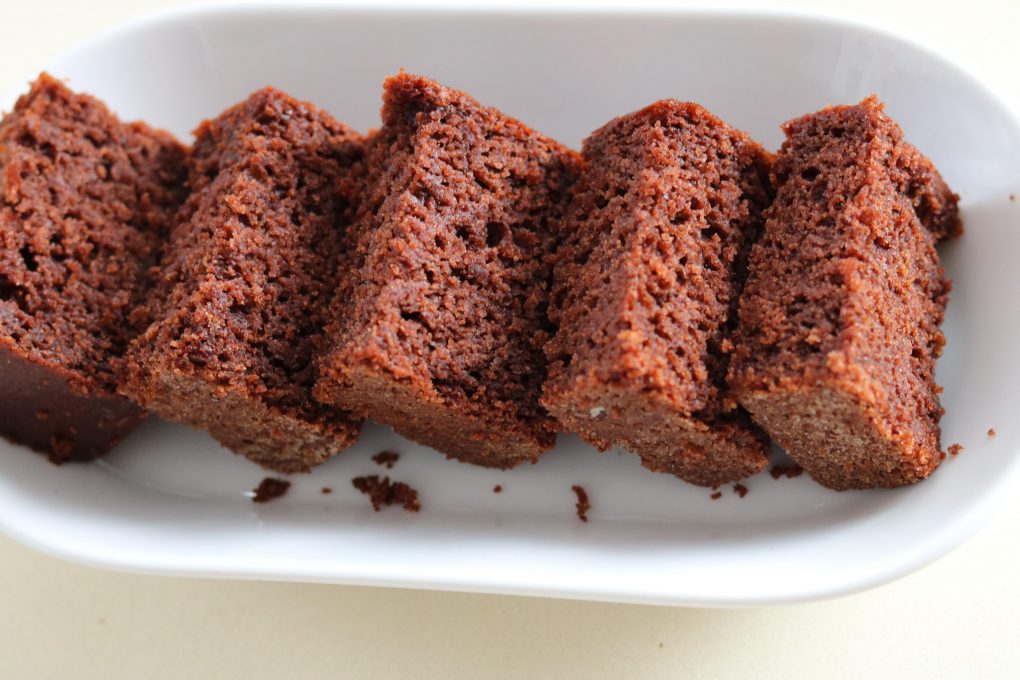
I often make this ragi and chocolate cake. It is very healthy and can be made with the regularly available ingredients. The color and taste of ragi are hidden by cocoa powder. It is thus enjoyed by kids. Adults also love it. During celebrations, I decorate the cake with chocolate sauce. This time I added a banana for additional flavor. The cake came out very well. It was moist and soft. For an eggless cake, adding banana increases its softness. The cake remains moist and fluffy.

My son takes it in his lunch box or likes to have it for a mini snack between meals.

Enjoy baking this healthy cake and enjoy it either plain or with a frosting of your choice. It goes very well with a cup of hot tea or coffee.

Eggless Ragi Chocolate Banana Cake/ Eggless Finger Millet Chocolate Banana Cake
Print Recipe
4.56 from 9 votes

Eggless Ragi Chocolate Banana Cake/ Eggless Finger Millet Chocolate Banana Cake

Eggless Ragi Chocolate Banana Cake is a soft and moist cake which combines the flavors of chocolate and banana. It is healthy and nutritious and is packed with the goodness of Finger Millet (ragi/nachni). It is a good option for snacking and for kids lunch box.
Prep Time10 minutes
Cook Time40 minutes
Total Time50 minutes
Course: Dessert, Snack
Cuisine: Indian
Servings: 1 loaf
Calories: 2339kcal

Ingredients

Instructions

  • Sift all the dry ingredients three to four times in sieve. (Whole wheat flour, finger millet-ragi flour, cocoa powder, baking soda, baking powder, salt).
    Eggless Ragi Chocolate Banana Cake/ Eggless Finger Millet Chocolate Banana Cake
  • Mash the ripe banana with a potato masher in a bowl.
    Eggless Ragi Chocolate Banana Cake/ Eggless Finger Millet Chocolate Banana Cake
  • Add milk, thick curd, oil, vanilla essence, and honey.
    Eggless Ragi Chocolate Banana Cake/ Eggless Finger Millet Chocolate Banana Cake
  • Add the raw sugar.
    Eggless Ragi Chocolate Banana Cake/ Eggless Finger Millet Chocolate Banana Cake
  • Mix them well till the sugar dissolves.
    Eggless Ragi Chocolate Banana Cake/ Eggless Finger Millet Chocolate Banana Cake
  • Gradually add the sifted dry ingredients to wet ingredients in two batches.
    Eggless Ragi Chocolate Banana Cake/ Eggless Finger Millet Chocolate Banana Cake
  • Mix it slowly. There should be no lumps. The batter is ready.
    Eggless Ragi Chocolate Banana Cake/ Eggless Finger Millet Chocolate Banana Cake
  • Pour the cake batter in the greased and dusted pan. (I have used 8.5" x 6.5" rectangle cake tin). Tap it three to four times.
    Eggless Ragi Chocolate Banana Cake/ Eggless Finger Millet Chocolate Banana Cake
  • Bake it for 35-40 minutes in a preheated oven @ 180 C.
    Eggless Ragi Chocolate Banana Cake/ Eggless Finger Millet Chocolate Banana Cake
  • Remove tine from oven, cool and place the tin upside down and unmould the cake.
    Eggless Ragi Chocolate Banana Cake/ Eggless Finger Millet Chocolate Banana Cake
  • Cut into pieces and serve.
    Eggless Ragi Chocolate Banana Cake/ Eggless Finger Millet Chocolate Banana Cake

Nutrition

Calories: 2339kcal | Carbohydrates: 411g | Protein: 49g | Fat: 67g | Saturated Fat: 9g | Polyunsaturated Fat: 30g | Monounsaturated Fat: 21g | Cholesterol: 8mg | Sodium: 1492mg | Potassium: 943mg | Fiber: 34g | Sugar: 217g | Vitamin A: 10IU | Calcium: 530mg | Iron: 11mg

Corn and Spinach Panki

Corn and spinach panki

Corn and spinach panki

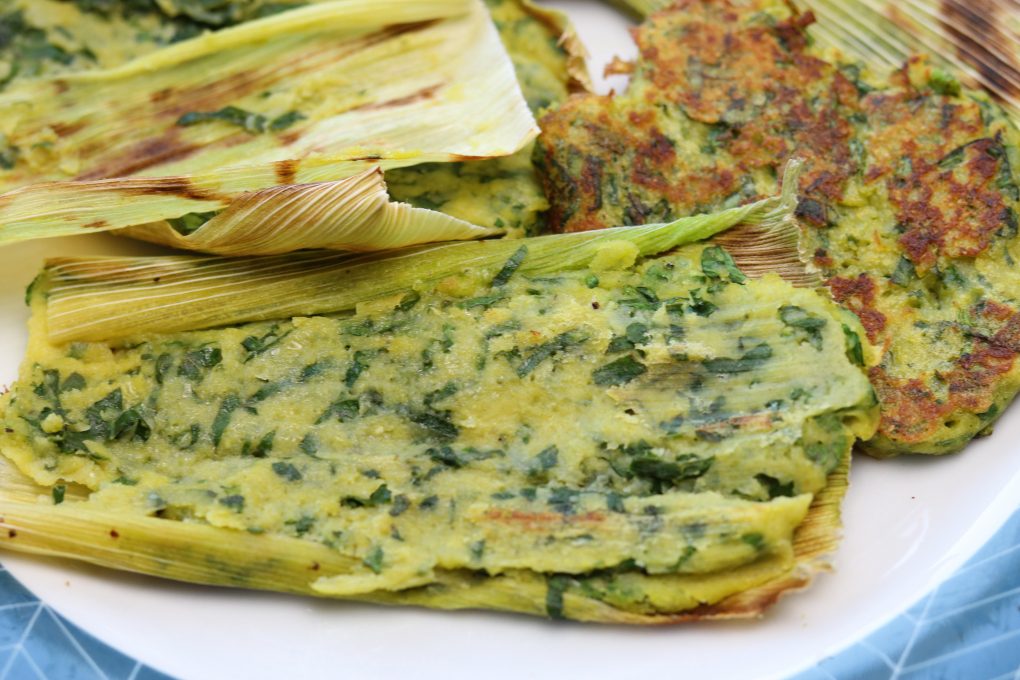
Panki- It is a type of pancake, where the batter is cooked by putting it between banana or corn leaves. In Gujarati, “pan” means ‘leaf”. So the name panki (made on leaf).

It is a traditional non-fried snack made in Gujarat. Usually, panki is made from rice flour batter.  The batter for it is prepared with rice flour along with spices such as ginger garlic paste, chili paste, cumin seeds, sesame seeds, asafoetida, turmeric (optional), salt, curd and warm water. The batter is prepared and kept covered for 3-4 hours to let it ferment. Rice panki is then made by putting the batter on the greased banana leaf. It is covered with another greased banana leaf and cooked on the non-stick pan. The panki is cooked on medium heat till golden spot appears on the leaf and the panki inside the leaf can easily be peeled off.

Variations in panki can be made by using different types of flour such as maize flour, semolina, gram flour or ragi flour. The taste of panki can be enhanced by adding coriander, spinach, dill leaves, fenugreek leaves or spring onion. This way you can try mixing different ingredients and make panki as per your taste.

I have brought corn cobs from the store and it was covered with fresh leaves around. I thought of utilizing the corn leaves for making corn and spinach panki. This is a no ginger or garlic dish. The panki has the fresh flavor of fresh corn, spinach, and green chilis. The panki gains more flavor and aroma when cooked on the fresh corn leaf.

Just enjoy corn and spinach panki plain straight from the leaf. Or serve it with coriander mint chutney and ketchup.

Corn and spinach panki
Print Recipe
5 from 2 votes

Corn and Spinach Panki

Corn and spinach panki is a traditional pancake made in Gujarati cuisine. Here the batter is placed between the greased corn or banana leaves and roasted on a pan till golden spots appear on the leaves and the panki inside peels off easily.
Prep Time10 minutes
Cook Time15 minutes
Total Time25 minutes
Course: Breakfast, dinner, Snack
Cuisine: Gujarati, Indian
Servings: 10 panki
Calories: 96kcal

Ingredients

Instructions

  • In a mixer grinder add the fresh corn kernels and green chili. Grind it to a smooth paste.
    Corn and spinach panki
  • Transfer the paste to the mixing bowl. Add semolina, gram flour, rice flour and chopped spinach.
    Corn and spinach panki
  • Add oil, black pepper powder, and salt and mix well.
    Corn and spinach panki
  • Mix well. The water released from corn paste and spinach would help to make the batter. However, if you required add a tbsp or more of water and adjust the consistency of the batter.
    Corn and spinach panki
  • Heat a non stick pan. Grease corn leaves with oil. Take one leaf and place batter around 1-2 tbsp on the greased side of the leaf. (Place batter as per the size of the leaf. Spread a thin layer of batter.). Cover with the other greased side leaf the batter from top.
    Corn and spinach panki
  • Make it similarly with other leaves.
    Corn and spinach panki
  • Cook on medium heat till the leaves become brown from both the sides. Try to lift the top leaf , if it leaves the batter, then the panki is cooked and ready to serve.
    Corn and spinach panki
  • Serve it hot along with leaf covered on it.
    Corn and spinach panki
  • If you do not have leaf then just spread the batter on the pan like pancake as shown and apply oil and cook from both the sides till golden and serve.
    Corn and spinach panki
  • The panki served - Both with corn leaf and without corn leaf is served.
    Corn and spinach panki

Nutrition

Calories: 96kcal | Carbohydrates: 17g | Protein: 4g | Fat: 2g | Saturated Fat: 0.3g | Polyunsaturated Fat: 1g | Monounsaturated Fat: 1g | Sodium: 45mg | Potassium: 399mg | Fiber: 3g | Sugar: 2g | Vitamin A: 4500IU | Vitamin C: 21.5mg | Calcium: 50mg | Iron: 1.8mg

Onion Rava Dosa

Onion Rava Dosa

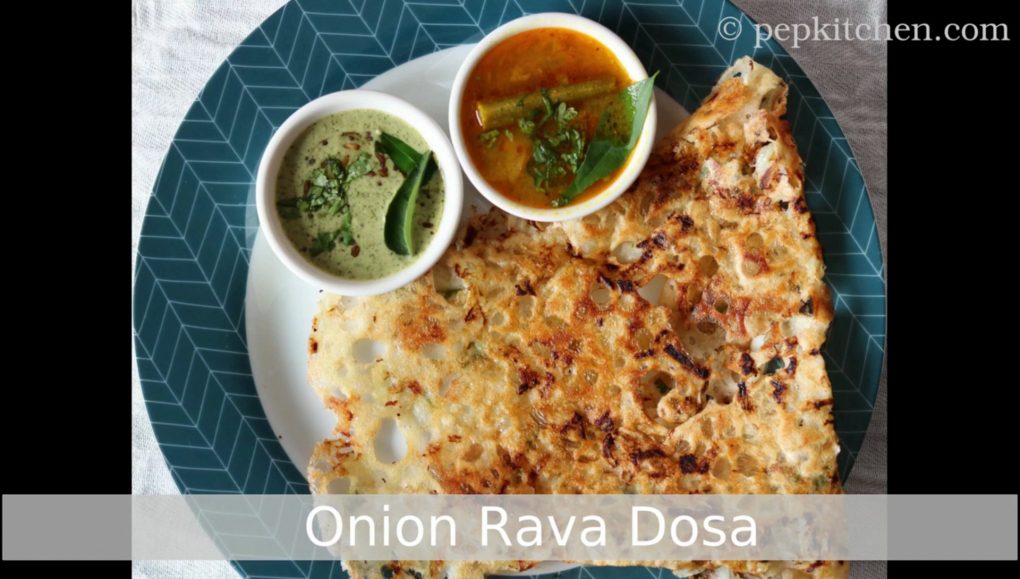
Rava Dosa is a very popular variant of South Indian dosa. You will find Rava Sada Dosa, Rava masala dosa, Onion Rava dosa, Onion rava masala dosa, Mysore rava dosa or Mysore rava masala dosa in restaurants..

This dosa is very crispy and looks like a net. This makes us think that making this dosa at home would be very difficult. But believe me, it is super easy! It will come out very well, just like in restaurants. On top of that, it will be homemade and hygienic.

The main ingredients for making this dosa are semolina (rava/sooji), rice flour and maida (all purpose flour). You can keep the dosa plain or add flavors such as ginger, green chili, coriander, curry leaves, cumin seeds and asafoetida. The secret for making a crisp and thin rava dosa lies in making its batter. The batter should be as thin as buttermilk. Make the batter and let it rest for 30 minutes. Unlike rice dosa there is no fermentation required to make the batter hence this recipe is instant and handy. For making the batter with 1 cup semolina, 1/2 cup rice flour, and 1/4 cup maida you will require approximately 5 cups of water or a little more.

The other thing to take care of is pouring the batter into the pan. The pan on which the dosa is made has to be heated properly. Grease and wipe the pan and then stir the batter. The batter is thin and hence the flour would settle at the bottom of the pan. Start pouring the batter with a flat spoon. (Do not use a ladle or small bowl). Start pouring batter from the edges of the pan first and then come to the middle of the pan. The heated pan will help to create the net while pouring the thin batter into it. Pour the batter into the big gaps created in the net. This will prevent dosa from breaking while flipping.  The thin batter will also make the dosa crispy. Apply ghee or oil around the sides and middle of the dosa. The ghee will give nice taste and aroma to the dosa. Apply a generous amount of ghee or oil to make the dosa crispy. Cook the dosa on medium heat. It will take around 7-8 minutes to cook the dosa after pouring the batter on one side. The batter has a lot of water and it will take some time to burn that water, so there is no need to worry that dosa will burn. Once golden spots are visible start lifting the dosa from the edges of the pan with a flat spatula. Flip and cook for 2-3 minute, fold and serve hot.

This recipe shows the process of both rava sada dosa and onion rava dosa.

To make rava masala dosa, make rava sada dosa as above and then put masala (spiced potato, peas and onion mixture) on the dosa and fold it and serve.

To make onion rava dosa, sprinkle chopped onions on the heated pan and pour the batter and cook as above.  Sprinkling onions directly over the heated pan releases a wonderful aroma of onions getting caramelized. I love making onion rava dosa this way.

Many people prefer to add chopped onions while making the batter.

This way you can make rava dosa and different variations such as masala dosa by adding masala and  Mysore rava dosa by spreading chutney.

Do try this super easy dosa and you will never want to have them in the restaurants!

Onion Rava Dosa
Print Recipe
4.41 from 5 votes

Onion Rava Dosa

Onion Rava Dosa is a popular variety of South Indian dosa with semolina (rava) as the key ingredient in addition to rice flour and all-purpose flour. The batter is made thin like buttermilk and there is no need for fermentation like the normal rice dosa. It is instant and can be made quickly on demand.
Prep Time10 minutes
Cook Time1 hour 30 minutes
Total Time1 hour 40 minutes
Course: Breakfast, Main Dish
Servings: 9 Dosa
Calories: 263kcal

Ingredients

Instructions

  • In a big mixing bowl add semolina, rice flour and maida. Mix them well.
    Onion Rava Dosa
  • Add grated ginger, chopped coriander, chopped green chilies, chopped curry leaves, cumin seeds, yogurt, asafoetida and salt as per taste.
    Onion Rava Dosa
  • Add five cups of water. Mix well so that no lumps are formed.
    Onion Rava Dosa
  • The batter should be thin and should have buttermilk like consistency. Add more water if required. Let the batter rest for 30 minutes.
    Onion Rava Dosa
  • Heat a non-stick flat pan. Apply oil over it.
    Onion Rava Dosa
  • Wipe the pan with a kitchen towel or napkin. (I alternatively wipe pan with oil and water mixture- 1tsp oil in a bowl of water, soak the kitchen towel into the mixture, squeeze it well and then wipe the pan. This way it helps to grease the pan and brings down the heat of the pan).
    Onion Rava Dosa
  • Mix the batter well and start pouring it from the edge of the pan with a help of a flat spoon. Start pouring the batter from the edge and then come in between. Keep on stirring the batter in between. (The batter is very thin and hence the flour will settle down at the bottom. Hence keep on stirring to get the even batter while pouring on a pan)
    Onion Rava Dosa
  • Pour the batter in the big gaps and fill it.
    Onion Rava Dosa
  • Apply 2 tsp ghee (you can also use oil) on sides and middle of the dosa. Let the dosa cook on medium heat. It will take about 7-8 minutes to cook it on one side.
    Onion Rava Dosa
  • Start lifting the dosa from edges with a flat spatula.
    Onion Rava Dosa
  • Flip the dosa and let it cook on the other side for 2-3 minutes.
    Rava Sada Dosa
  • Flip the dosa again and start folding from both the edge as shown.
    Onion Rava Dosa
  • Fold the dosa this way and press it.
    Onion Rava Dosa
  • Flip the dosa and the Rava Sada Dosa is ready to serve. Serve this crispy dosa hot with chutney and sambhar.
    Rava Sada Dosa
  • For making onion rava dosa, wipe the heated pan and sprinkle chopped onions over it. The aroma released from the onion is tempting.
    Onion Rava Dosa
  • Now stir the batter and start pouring it from edges with a flat spoon as done earlier. Start pouring the batter from the edge and then come in between. Keep on stirring the batter in between. (The batter is very thin and hence the flour will settle down at the bottom. Hence keep on stirring to get the even batter while pouring on a pan). Fill the gaps with the batter as done for the rava sada dosa.
    Onion Rava Dosa
  • Apply 2 tsp ghee (you can also use oil) on sides and middle of the dosa. Let the dosa cook on medium heat. It will take about 7-8 minutes to cook it on one side.
    Onion Rava Dosa
  • Start lifting the dosa from edges with a flat spatula.
    Onion Rava Dosa
  • Flip the dosa and let it cook on the other side for 2-3 minutes.
    Onion Rava Dosa
  • Flip the dosa again and start folding from both the edge as shown.
    Onion Rava Dosa
  • Flip the folded dosa and it is ready to serve.
    Onion Rava Dosa
  • Serve the onion rava dosa hot with sambhar and chutney.
    Onion Rava Dosa

Nutrition

Calories: 263kcal | Carbohydrates: 34g | Protein: 5g | Fat: 13g | Saturated Fat: 7g | Polyunsaturated Fat: 1g | Monounsaturated Fat: 1g | Cholesterol: 10mg | Sodium: 4mg | Potassium: 148mg | Fiber: 3g | Sugar: 1g | Vitamin A: 5IU | Vitamin C: 3.3mg | Calcium: 40mg | Iron: 1.4mg

Capsicum carrot sambharo/Capsicum Carrot Stir Fry/Gajar Marcha Sambharo

Capsicum carrot sambharo/Capsicum Carrot Stir Fry/Gajar Marcha Sambharo

Gajar No Sambharo /Carrot Stir Fry

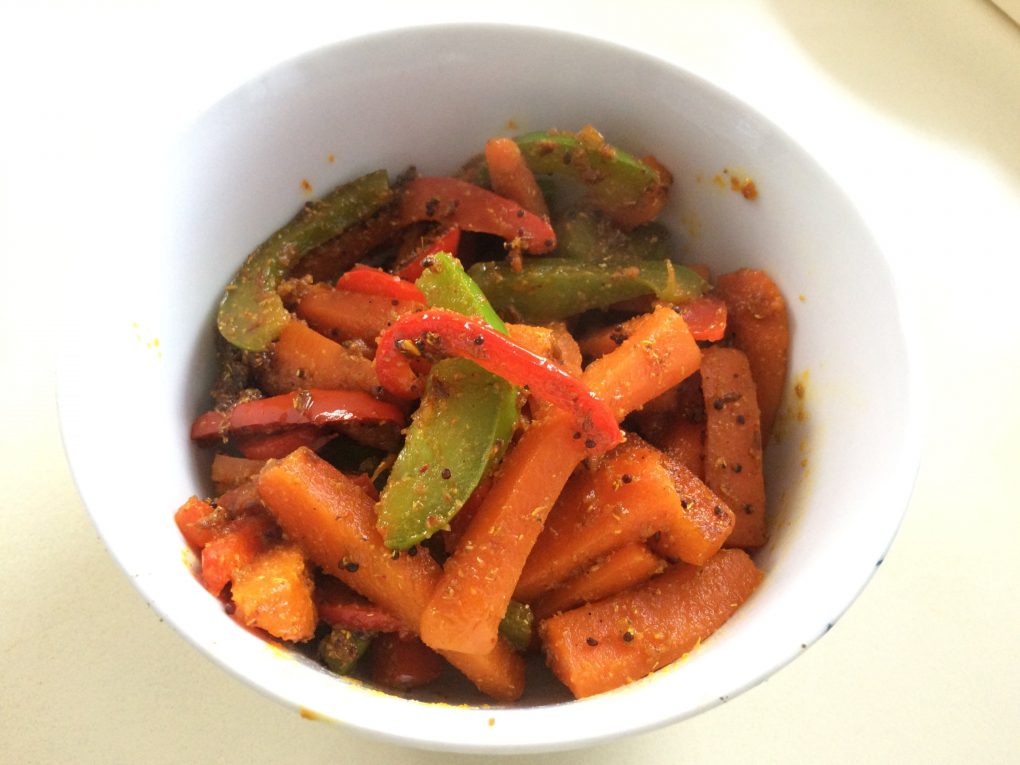
Sambharo – an integral part of a Gujarati meal. It is a warm salad served as an accompaniment to a Gujarati meal. It is often served along with farsan such as fafda, bhajia, dhokla, khaman or wada.  The sambharo is crunchy and is very quick and easy to make. The vegetables are stir fried and lightly cooked and retain the fresh bright color.  Sambharo can be made with different vegetables such as cabbage, raw papaya, purple cabbage, carrots, capsicum, ivy gourd (tindora), raw mango, radish. The vegetables can be cooked individually or in combination with one another. The vegetables can be chopped lengthwise or grated.

The vegetables are lightly tossed and cooked with spices and lemon and sugar. It is balanced with sour and sweet taste. However, lemon and sugar are optional.

My father is from Kathiyawad and so we have enjoyed the kathiyawadi food from childhood. Sambharo used to be a side dish to our meal. My mother would make different kinds of Sambharo. When she used to stir-fry the vegetables, a very nice aroma would come out and awaken our appetite. It also signalled us that the meal is ready and we should get together for lunch or dinner. My mother always cooked sambharo just before serving the lunch or dinner. I have learned to cook the capsicum carrot sambharo from her. She usually uses  Wadhwani Chili (this chili is from Wadhwa region in Surendranagar in Kathiyawad Gujarat.It is mildly spicy and has a very nice smell and taste). She uses capsicum if Wadhwani chili is not available. When stir-frying the carrot and capsicum, she sprinkles some water; this helps to cook the carrots quickly while retaining its color. Also, she likes to add sugar and saute the sambharo. This helps to melt the sugar and caramelize the sambharo lightly which further enhances its taste and color. The sugar sweetness is balanced with lemon juice.

I follow her recipe and it is loved by everyone in my house.

Capsicum carrot sambharo/Capsicum Carrot Stir Fry/Gajar Marcha Sambharo
Print Recipe
5 from 3 votes

Capsicum carrot sambharo/Capsicum Carrot Stir Fry/Gajar Marcha Sambharo

A quick side dish or a warm salad served as an accompaniment to Gujarati meal. Carrot and capsicum are stir-fried and lightly cooked along with spices.
Prep Time5 minutes
Cook Time10 minutes
Total Time15 minutes
Course: Salad
Servings: 1 bowl
Calories: 201kcal

Ingredients

Instructions

  • Heat oil in a pan. Add mustard seeds and cumin seeds. When they crackle add asafoetida and turmeric powder.
    Capsicum carrot sambharo/Capsicum Carrot Stir Fry/Gajar Marcha Sambharo
  • Add the chopped carrots. Add salt and mix well. Sprinkle a tablespoon on water and mix and cover with lid and cook for 2-3 minutes.
    Capsicum carrot sambharo/Capsicum Carrot Stir Fry/Gajar Marcha Sambharo
  • Now add the chopped red and green capsicum. Mix well and cover and cook for 2-3 minutes. Open the lid and add corainder cumin seed powder and sugar.
    Capsicum carrot sambharo/Capsicum Carrot Stir Fry/Gajar Marcha Sambharo
  • Mix well and add red chili powder. Cook for a minute and add lemon juice. Mix well .
    Capsicum carrot sambharo/Capsicum Carrot Stir Fry/Gajar Marcha Sambharo
  • The Capsicum carrot sambharo is ready to serve.
    Capsicum carrot sambharo/Capsicum Carrot Stir Fry/Gajar Marcha Sambharo
  • Capsicum carrot sambharo/Capsicum Carrot Stir Fry/Gajar Marcha Sambharo

Nutrition

Calories: 201kcal | Carbohydrates: 31g | Protein: 4g | Fat: 10g | Saturated Fat: 1g | Polyunsaturated Fat: 4g | Monounsaturated Fat: 5g | Sodium: 124mg | Potassium: 809mg | Fiber: 12g | Sugar: 13g | Vitamin A: 22000IU | Vitamin C: 206.3mg | Calcium: 160mg | Iron: 5.6mg

Sooji Paniyaram

Sooji Paniyaram

Sooji Paniyaram

Paniyaram is a South Indian breakfast or snack recipe. It is known as Kuzhi Paniyaram in Tamil, Paddu in Kannada, Gunta Ponganalu in Telugu. I had it first at a restaurant serving authentic South Indian Food in Baroda, Gujarat. I had masala Paniyaram at that time and fell in love with it. They were crispy from outside and soft from inside and were balanced with the spices. After that, whenever I go to such restaurants serving South Indian food, I tryPaniyaram. I was keen on making it at home. I searched for some recipes and found out that it requires a special pan known as appam pan or Paniyaram pan or paniyarkal in many shops. The pan consists of several small, deep, hemispherical indentations.  We have to grease the small indentation and fill the batter in it. Cover and cook for sometimes till golden on both the sides.

This pan is a boon for the people who want to consume very less oil. Due to its shape, the heat can be distributed evenly to the individual hemisphere and the cooking becomes easy. Besides Paniyaram, we can make batata wada, medu vada, sabudana vada, sweet puffed pancakes, mix dal vada, corn fritters and many such dishes. The process of frying can be skipped. Hence this way we can consume less oil.

So during my trip to India this time I finally purchased the Paniyaram pan. After I came back, I simply could not resist making them.

Traditionally Paniyarams are made from the leftover idli or dosa batter. It is a fermented batter.  It is a combination of rice and black lentils (urad dal). They can be made spicy or sweet.

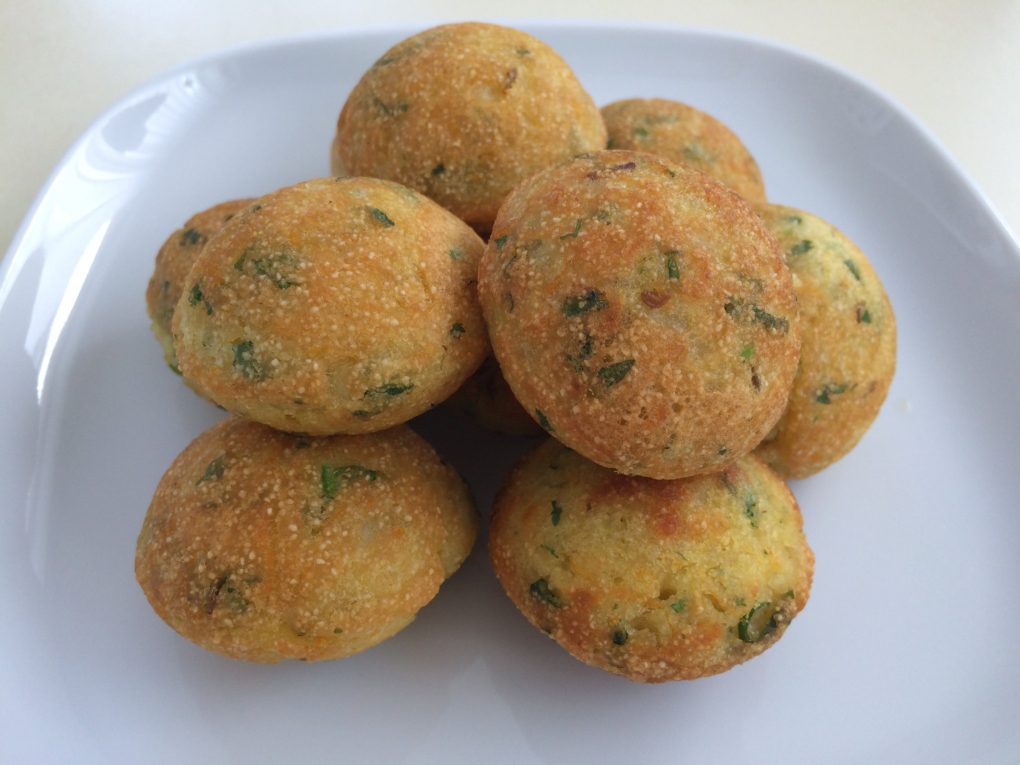
I did not have idli batter and made it with semolina. I have used semolina, rice flour and yogurt along with onions, carrot, coriander, curry leaves and flavored with ginger, green chili, and cumin seeds. I added some cooking soda to it. This made the Paniyarams fluffy and soft. The Paniyaram came out very well and hence I thought of sharing with you all this quick recipe.

They taste equally good when hot, warm and even cold. I had  4-5 Paniyaram left after morning breakfast and had them cold with my evening tea. Thus they are a good option for kids lunch box.

I am in love with this pan and would recommend that every household have it in their kitchen. I will try out different types of Paniyaram and will share with you all the recipes for the same.


Sooji Paniyaram
Print Recipe
4.60 from 5 votes

Sooji Paniyaram

Sooji Paniyaram is a very tasty breakfast or snack where the batter is cooked in a special pan known as "paniyaram pan". The batter is made from semolina, rice flour, carrot , coriander , curry leaves and is flavored with ginger, green chili , salt and cumin seeds. It is then cooked in the pan and comes out as a puffed sphere which is crisp outside and soft from inside.
Prep Time10 minutes
Cook Time20 minutes
Total Time30 minutes
Course: Breakfast, Snack, Starters
Servings: 22 paniyaram
Calories: 54kcal

Ingredients

Instructions

  • In a bowl add semolina and rice flour. Mix well.
    Sooji Paniyaram
  • Add grated carrots, onions, chopped coriander, grated ginger, green chili, curry leaves and curd.
    Sooji Paniyaram
  • Mix well and add cooking soda, soda and cumin seeds.
    Sooji Paniyaram
  • Mix well and keep aside for 5-10 minutes.
    Sooji Paniyaram
  • Heat and grease the paniyaram pan.
    Sooji Paniyaram
  • Put a tbsp of batter in each part of the pan.
    Sooji Paniyaram
  • Cover the pan and let it cook for 7 minutes.
    Sooji Paniyaram
  • Gently flip them. Cover and cook on other side for 3 minutes.
    Sooji Paniyaram
  • After three minutes the paniyaram are done.
    Sooji Paniyaram
  • Remove the paniyaram. Serve hot with chutney of your choice and tea or coffee.
    Sooji Paniyaram
  • Sooji Paniyaram

Nutrition

Calories: 54kcal | Carbohydrates: 9g | Protein: 1g | Fat: 2g | Saturated Fat: 0.2g | Polyunsaturated Fat: 1g | Monounsaturated Fat: 1g | Cholesterol: 0.3mg | Sodium: 5mg | Potassium: 48mg | Fiber: 1g | Sugar: 1g | Vitamin A: 250IU | Vitamin C: 0.8mg | Calcium: 20mg | Iron: 0.5mg

Mango Custard

Mango Custard

Mango Custard Indian Style

Summer brings lots of heat and mangoes!! I wait for mangoes because I love that fruit very much. In fact, a majority of us love this king of fruits. The heat of summer subsides with this sweet fruit. Mangoes can be eaten as raw or as ripe.

People want to eat something cool and fresh to bear the summer heat. Custard is the dessert of choice in parties and marriages. It is very refreshing and is packed with the goodness of milk which has calcium and protein. It is popular in any age group. You can make fruit custard, chocolate custard, caramel custard, strawberry custard or mango custard.

While making the custard, milk is thickened either with eggs or any starch. For making eggless custard use custard powder. Custard powder is cornflour with some flavoring and color.

Various flavors of custard powder are available in the market such as vanilla, mango, strawberry, banana. I prefer using vanilla flavor as it is the most loved flavor and goes well with any fruit or dry nuts and dry fruits.

The consistency of the custard depends on the amount of custard powder used and type of milk during cooking, I have used 2 tbsp of custard powder for 500 g of milk.

for thinner pouring consistency, use 1.5 tbsp of custard powder for 500 g milk.

for setting or thick custard, use 3-4 tbsp of custard powder for 500 g of milk.

While making custard take note of the following points:

  1. Use a heavy bottom pan for boiling milk.
  2. Always keep aside some milk before boiling and mix the custard powder in it.
  3. Add the custard powder and milk mixture slowly to the boiled milk. Keep on stirring in between so that no lumps are formed and the custard powder does not stick to the bottom of the pan.
  4. The milk will start to thicken once custard powder is added to it. Add sugar to it. Stir and cook for 5 minutes till the milk is thick and the raw taste of the custard powder goes away.
  5. Always cool the custard and then add all the fruits or fruit puree to it.

In the custard, you can mix fruits such as banana, apple, chickoo, grapes, pomegranate, strawberry or orange and can make mix fruit custard or Indian fruit salad.

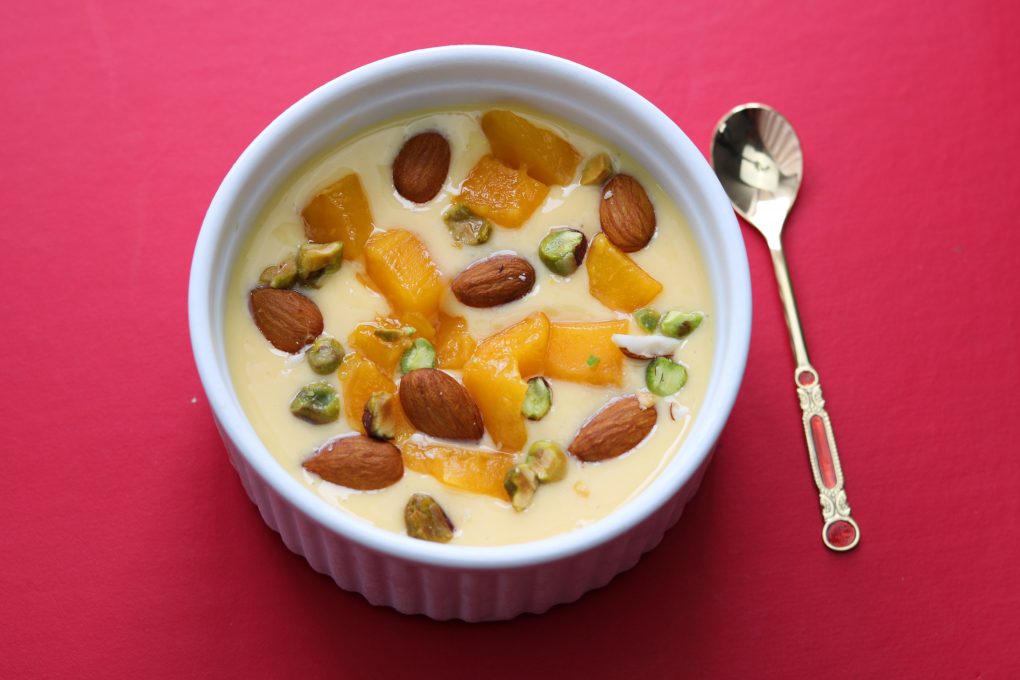
Mango Custard is the perfect way to use the king of fruit. This recipe covers the Indian way of making the custard. It is a good dessert to impress your guests and is perfect for summer.

The amount of sugar can be added as per individual taste. I prefer using less sugar in the Mango Custard as the mango puree and mango pieces added to the custard are sweet.

Use mango which is sweet and more fleshy. Here in Sydney, we get Kensington Pride and R2E2 which goes well. You can also use fresh Alphonso or the frozen or canned ones. If the mango puree has more threads in to then strain the puree through the strainer so that you don’t get the threads while eating the custard.

The use of dry nuts such as almonds, pistachio or cashew nut will give an additional crunch to the mango custard.

I have made custard using the full cream milk. You can also make it with low-fat milk. It tastes equally good.

Many restaurants blend heavy cream in the custard to make it more creamy and smooth. It is optional to use.

The mango custard tastes best when served chill. It can be enjoyed for 3-4 days when refrigerated.

Mango Custard
Print Recipe
5 from 2 votes

Mango Custard

A very delicious dessert made by thickening milk with custard powder along with sugar. . The flavor of the custard is enhanced by mixing fresh mango puree and is served chilled along with fresh mango cubes and nuts.
Prep Time15 minutes
Cook Time20 minutes
Total Time35 minutes
Course: Dessert
Cuisine: Global
Servings: 15 bowl
Calories: 223kcal

Ingredients

Instructions

  • Put milk to boil in a thick bottom pan. (keep aside a cup of milk for combining custard powder ).
    Mango Custard
  • Take the custard powder in a bowl.
    Mango Custard
  • Add the milk that was kept aside and mix.
    Mango Custard
  • Stir and mix the custard powder well till all the lumps are gone.
    Mango Custard
  • When the milk starts boiling, reduce the heat and pour the prepared custard powder mix. Stir the milk continuously to prevent custard mixture from sticking at the bottom of the pan.
    Mango Custard
  • After 2-4 minutes the milk will start to thicken. Keep on stirring continuously.
    Mango Custard
  • Add sugar to the thickened milk and mix well.
    Mango Custard
  • Let the custard cook on medium heat for 5 more minutes. Keep on stirring continuously to prevent from sticking at the bottom. The custard is ready. Keep it aside to come at room temperature. Meanwhile, keep on stirring the custard in between to prevent a layer which forms on top while the custard is cooling.
    Mango Custard
  • Once the custard is cooled to room temperature blend it with a hand blender so that it becomes smooth and even.
    Mango Custard
  • Sieve the custard through the strainer to remove any lumps.
    Mango Custard
  • The custard is ready. Let it cool it for 3-4 hours in the fridge.
    Mango Custard
  • Puree the mangoes. If it has threads then strain the puree through the strainer to get a smooth mango puree. Cut the rest of the mango into cubes.
    Mango Custard
  • After 4 hours when the custard is cold, add the mango puree to it and blend it well with a hand blender.
    Mango Custard
  • Mix it well. Mango custard is ready to get chill and serve. You can fill them in an individual serving bowl and chill till serving.
    Mango Custard
  • While serving fill the bowl with the chilled mango custard.
    Mango Custard
  • Put the mango cubes and sliced almonds and pistachio or any nut of your choice. Serve it chill.
    Mango Custard
  • Mango Custard

Nutrition

Calories: 223kcal | Carbohydrates: 36g | Protein: 6g | Fat: 7g | Saturated Fat: 3g | Polyunsaturated Fat: 1g | Monounsaturated Fat: 3g | Cholesterol: 20mg | Sodium: 63mg | Potassium: 406mg | Fiber: 2g | Sugar: 34g | Vitamin A: 950IU | Vitamin C: 40.4mg | Calcium: 190mg | Iron: 0.4mg

Bread Pinwheel Sandwich/Bread Sushi

Bread Pinwheel Sandwich/Bread Sushi

Bread Pinwheel Sandwich/Bread Sushi

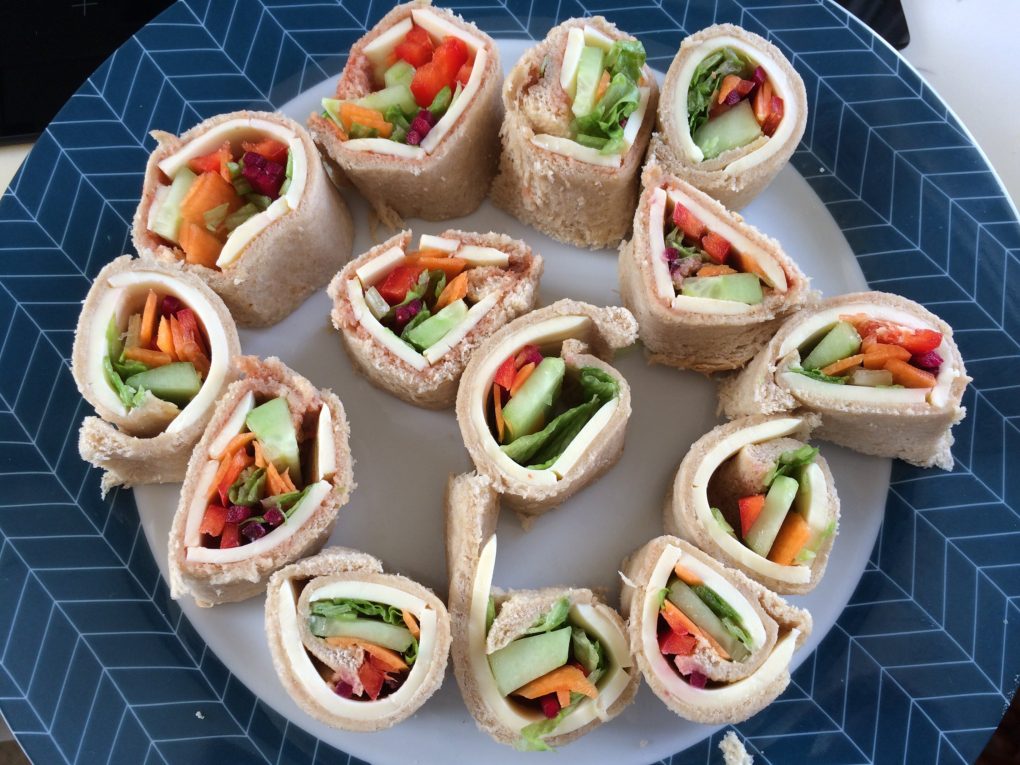
Bread pinwheel sandwich or as my son calls it, Bread Sushi, is a small bite-sized sandwich. The buttered slice of bread is filled with various types of filling and it is then rolled tightly into a log. The log is then cut into slices with a sharp knife.

This small bite-sized sandwich is good for kids’ parties. It can also be served as an appetizer for high tea party along with tea or coffee. It can be a good treat for kids lunch box. It is very eye appealing.

This sandwich is very easy to make.

  1. Select a good quality big-sized bread if available.
  2. Cut the edges of bread with a knife.
  3. Here we need a single slice of bread. The bread is rolled thin with a rolling pin.
  4. Apply butter, jam, peanut butter, mayonnaise, cream cheese, Nutella, chutney, or any spread of your choice.
  5. Put the filling of your choices such as thinly stripped veggies, veggie roll, cheese slice, ham slice, salami, tofu, paneer, fruit slices or any veg or non-veg filling as per your taste. (make sure that the filling is in thin strips/ slices and is less in quantity. Do not overfill the bread. It will become difficult to roll the bread into a roll.)
  6. Start rolling the bread from one side tightly.
  7. If you want you can cling wrap the prepared roll and refrigerate them for 30 minutes before cutting, Or you can directly cut it into slices and serve. Refrigerating the roll makes it firm and easy to cut. While cutting, cut the uneven end first. If you are serving at kids’ parties you can put toothpick along the cut slices making it easier to eat.

My son loves mini sushi and so one day I thought of making something with bread that looks like a mini sushi. I made the cheese and cucumber pinwheel sandwich for his lunch box and he was very happy and called it bread sushi. From then on, I started making different combinations of bread sushi for him such as cucumber and lettuce, carrot and bell pepper, spinach and omelet. He enjoys this in his lunch box.

I make this pinwheel sandwich and carry it as a snack for a picnic. This time I made it along with different fresh veggies and salad leaves for a picnic. I have shown the step by step method of making it below.

Make and enjoy this pinwheel sandwich!!


Bread Pinwheel Sandwich/Bread Sushi
Print Recipe
5 from 2 votes

Bread Pinwheel Sandwich/Bread Sushi

A very small bite size sandwich where the bread is filled with the filling as per choice and is rolled and then cut into slices. This sandwich is very pleasing to eye and easy to eat, pack for lunch boxes or picnic and good accompaniment to go with tea or coffee during high tea parties.
Prep Time15 minutes
Total Time15 minutes
Course: Snack, Starters
Cuisine: Global
Servings: 45 pin wheel
Calories: 44kcal

Ingredients

Instructions

  • Wash, cut different veggies into stips.
    Bread Pinwheel Sandwich/Bread Sushi
  • Cut the edges of the bread.
    Bread Pinwheel Sandwich/Bread Sushi
  • Roll the bread very thin with a rolling pin.
    Bread Pinwheel Sandwich/Bread Sushi
  • Apply butter to the bread slices.
    Bread Pinwheel Sandwich/Bread Sushi
  • Put cheese slice, shredded lettuce, cucumber strip, red bell pepper strip, carrot slices, beetroot strip, In some bread slice I have also placed the salad leaves. It can be seen in the final image.
    Bread Pinwheel Sandwich/Bread Sushi
  • Roll the bread tightly into a log.
    Bread Pinwheel Sandwich/Bread Sushi
  • Cut into slices and serve.
    Bread Pinwheel Sandwich/Bread Sushi

Nutrition

Calories: 44kcal | Carbohydrates: 4g | Protein: 1g | Fat: 2g | Saturated Fat: 1g | Polyunsaturated Fat: 0.1g | Monounsaturated Fat: 0.4g | Cholesterol: 7mg | Sodium: 95mg | Potassium: 36mg | Fiber: 0.4g | Sugar: 1g | Vitamin A: 600IU | Vitamin C: 3.3mg | Calcium: 60mg | Iron: 0.4mg