Chhole Tikki /Chickpea Patties

Chhole Tikki /Chickpea Patties

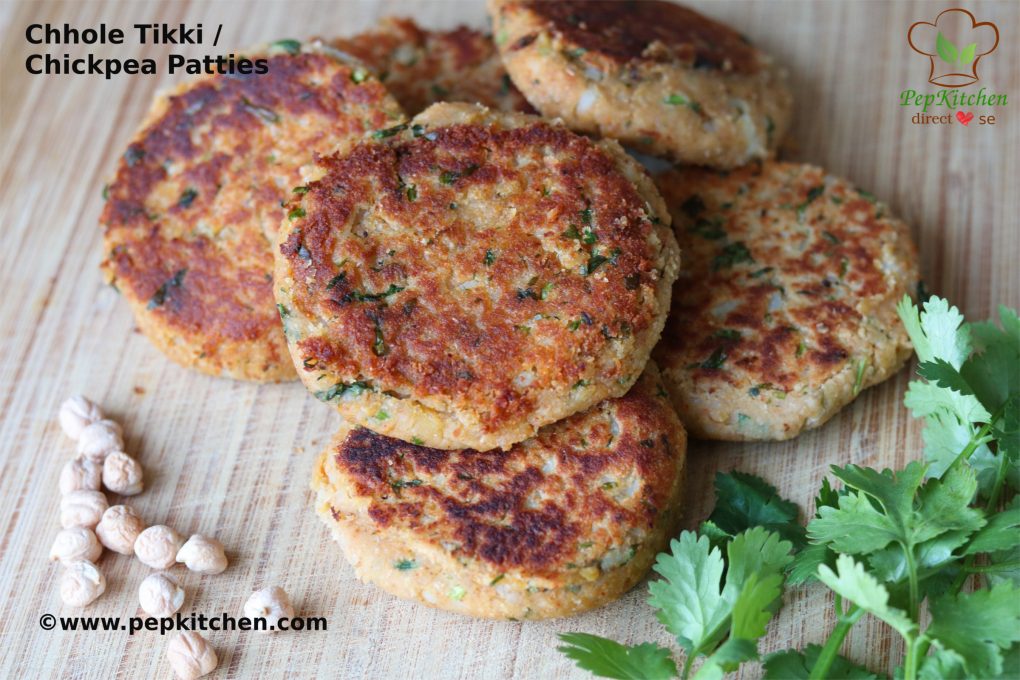
Chhole Tikki /Chickpea Patties are made from chickpea, potato, breadcrumbs. It is flavored with spices and shallow fried in a pan. It is crisp from outside and soft from inside. The tikki/patty can be served to your guests as an appetizer with mint yogurt dip, mint chutney, ketchup. It can be used in making Indian chaats such as tikki chat, ragda pattice. You can sandwich it between bread and salad.

The tikki/patty can be frozen for up to two months. This way you have them handy whenever you have a sudden guest for dinner. The patty can be used for making burgers. I will be sharing with you the process of making a burger with chickpea patty in my next recipe.

You can also simply eat this patty with a dish of salad for a healthy lunch. It is very healthy for kids and they will love it!

Chhole Tikki /Chickpea Patties
Print Recipe
5 from 2 votes

Chhole Tikki /Chickpea Patties

Chhole Tikki /Chickpea Patties are made with chickpea, potato and breadcrumbs and can be served as an appetizer with mint yogurt dip, mint chutney or ketchup. It can be used in making Indian chaats such as tikki chat, ragda pattice. You can sandwich it between bread and salad.
Prep Time25 minutes
Cook Time15 minutes
Total Time40 minutes
Course: Snack, Starters
Cuisine: Indian
Servings: 12 patty
Calories: 145kcal

Ingredients

Instructions

  • Heat oil in a pan. Add onions to it.
    Chhole Tikki /Chickpea Patties
  • Cook till translucent. Add ginger garlic paste to it. Saute.
    Chhole Tikki /Chickpea Patties
  • Cook until onion softens.
    Chhole Tikki /Chickpea Patties
  • In a big mixing, plate add boiled potato and bread crumbs. (grind bread in the grinder for breadcrumbs).
    Chhole Tikki /Chickpea Patties
  • Grind the boiled chickpea and onion mixture in the grind to a smooth paste.
    Chhole Tikki /Chickpea Patties
  • Mash the boiled potato, add chickpea onion paste, chopped coriander, red chili powder, roasted cumin powder and salt.
    Chhole Tikki /Chickpea Patties
  • Mix them well.
    Chhole Tikki /Chickpea Patties
  • Divide into 12 parts. Grease palms with oil and make balls and flatten the ball to make patty.
    Chhole Tikki /Chickpea Patties
  • Smoothen the edges of the patty by rubbing them on the board.
    Chhole Tikki /Chickpea Patties
  • Heat a non stick pan. Add oil to it and shallow fry the patty.
    Chhole Tikki /Chickpea Patties
  • Cook on both the sides till golden and crisp.
    Chhole Tikki /Chickpea Patties
  • The chhole tikki or chickpea patty are ready.
    Chhole Tikki /Chickpea Patties
  • Serve them warm with coriander chutney or mint chutney, yogurt and mint dip or ketchup. You can also use the chhole tikki to make chat or burgers.
    Chhole Tikki /Chickpea Patties

Nutrition

Calories: 145kcal | Carbohydrates: 24g | Protein: 5g | Fat: 5g | Saturated Fat: 1g | Polyunsaturated Fat: 2g | Monounsaturated Fat: 2g | Sodium: 102mg | Potassium: 407mg | Fiber: 8g | Sugar: 2g | Vitamin A: 50IU | Vitamin C: 17.3mg | Calcium: 80mg | Iron: 3.2mg

Eggless Cupcakes And Muffins

List of Eggless cupcakes and muffins

Cupcakes & muffins are small cakes made to serve a single person. They are baked in muffin tins that are lined with cupcake liners.

The batter of cupcakes/muffins is same as that of normal cakes. They bake faster compared to bigger cakes. As they are small in size, the heat conduction is fast and they cook faster. The main ingredients used for making good and spongy cupcakes are flour, butter, sugar, eggs and leavening agents. They can be made of different flavors and ingredients such as fruits, nuts, chocolate chips, rice cereals.

Here is the collection of easy and quick eggless cupcakes and muffins. Click on the image to get step by step instructions and pictures. They are light, fluffy, airy, soft and spongy.

Scroll below for delicious blueberry muffin, chocolate cupcake, custard powder cupcake, mango cupcake, oats-apple-and dates cupcakes, strawberry cupcake, whole wheat avocado lemon cupcake,  vegan wholewheat banana choco chip muffins.

[wpupg-grid id=”eggless-cupcakes-and-muffins”]

Ringan Batata Nu Shaak/Brinjal Potato Curry/Eggplant Potato Curry

Ringan Batata Nu Shaak/Brinjal Potato Curry


Ringan Batata Nu Shaak/Brinjal Potato Curry


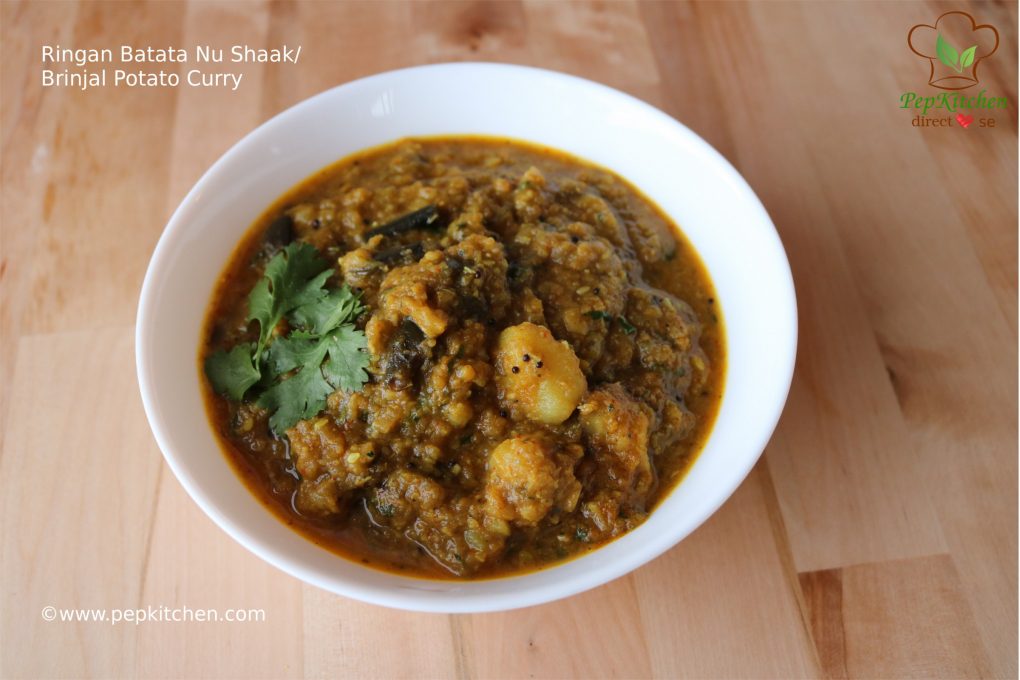
Ringan Batata Nu Shaak is a curry made with eggplant/aubergine/brinjal and potato. It is flavored with groundnut/peanut powder, desiccated coconut, and spices such as red chili powder, coriander-cumin powder, garam masala and turmeric powder. The added sugar gives sweetness to the dish and balances the flavor of eggplant. It is a regular dish prepared in Gujarati household and served with roti, bhakri, thepla, puri, rice and dal, khichdi and kadhi.

Always use fresh brinjal or eggplant for the recipe.

I have shared with you the pressure cooker method but you can also cook directly in the pan. Cover the pan with a lid after adding brinjal and potato and cook on medium heat, stirring in between till brinjal and potato are cooked. After that add the prepared masala with groundnut and coconut. Add little water if required and adjust the consistency of the curry. Cook till the masala is absorbed for 4-5 minutes.

Cook for 2 whistles on high heat and 1 on low heat when made in a pressure cooker. My husband likes the brinjal to be soft and mushy. So  I have cooked for 4-5 whistles.

You can cook the dish without adding peanuts and coconut. The other ingredients remain the same.

Ringan Batata Nu Shaak/Brinjal Potato Curry
Print Recipe
5 from 4 votes

Ringan Batata Nu Shaak/Brinjal Potato Curry

Ringan Batata Nu Shaak is a curry made with eggplant/aubergine/brinjal and potato. It is a regular dish prepared in Gujarati household and served with roti, bhakri, thepla, puri, rice and dal. khichdi or kadhi.
Prep Time10 minutes
Cook Time20 minutes
Total Time30 minutes
Course: Main Dish
Cuisine: Indian
Servings: 3 people
Calories: 282kcal

Ingredients

For masala

Instructions

  • Heat oil in a pressure cooker pan. Add mustard seeds, turmeric powder and asafoetida.
    Ringan Batata Nu Shaak/Brinjal Potato Curry
  • Add the chopped brinjals(eggplant/aubergine) and potato.
    Ringan Batata Nu Shaak/Brinjal Potato Curry
  • Mix and add salt as per taste.
    Ringan Batata Nu Shaak/Brinjal Potato Curry
  • Mix well. Add water and cover the lid with a whistle and pressure cook for 2 whistles on high and one whistle on low heat.
    Ringan Batata Nu Shaak/Brinjal Potato Curry
  • In the meantime prepare the masala. In a plate or bowl add groundnut powder, desiccated coconut, sesame seeds, red chili powder, coriander-cumin powder, garam masala, sugar, and a little salt.
    Ringan Batata Nu Shaak/Brinjal Potato Curry
  • Add chopped coriander and curry leaves. (i have used dried curry leaves).
    Ringan Batata Nu Shaak/Brinjal Potato Curry
  • Mix well.
    Ringan Batata Nu Shaak/Brinjal Potato Curry
  • Open the lid after the pressure cooker has cooled down.
    Ringan Batata Nu Shaak/Brinjal Potato Curry
  • Add the prepared masala and mix gently. (My husband likes the brinjal to be mushy and hence I have pressure cooked more than the time specified).
    Ringan Batata Nu Shaak/Brinjal Potato Curry
  • Simmer for 4-5 minutes till the masala is absorbed. The ringan batata nu shaak is ready.
    Ringan Batata Nu Shaak/Brinjal Potato Curry
  • Serve ringan batata nu shaak hot with roti, dhebra, paratha, rotla, puri, thepla, rice and dal, masala khichdi and kadhi.
    Ringan Batata Nu Shaak/Brinjal Potato Curry

Nutrition

Calories: 282kcal | Carbohydrates: 35g | Protein: 7g | Fat: 16g | Saturated Fat: 5g | Polyunsaturated Fat: 4g | Monounsaturated Fat: 5g | Sodium: 91mg | Potassium: 924mg | Fiber: 12g | Sugar: 12g | Vitamin A: 900IU | Vitamin C: 30.5mg | Calcium: 80mg | Iron: 3.1mg

Lila Kanda Chana Na Lot Nu Shaak/Spring Onion Chickpea Flour Fry/Kandacha Patichya Zunka

Lila Kanda Chana Na Lot Nu Shaak/Spring Onion Chickpea Flour Fry/Kandacha Patichya Zunka

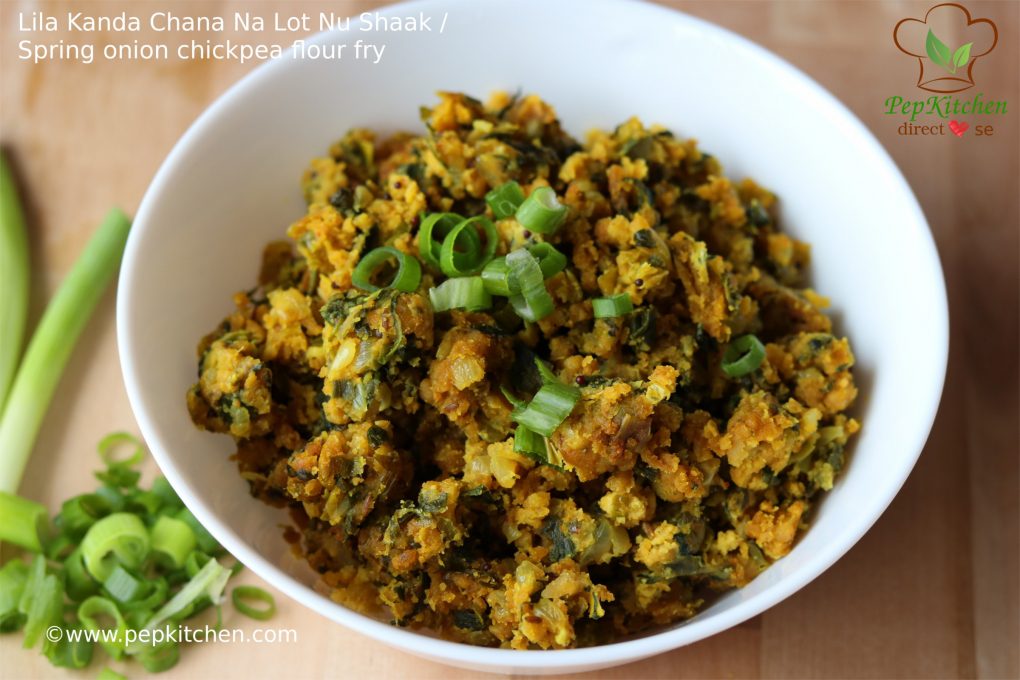
Lila Kanda Chana Na Lot Nu Shaak/Spring Onion Chickpea Flour Fry/Kandacha Patichya Zunka is a very quick and delicious dish made with spring onions and chickpea flour. It is very handy to make when you run out of vegetables. It is made with very few ingredients but is still flavorful. Serve it with chapati, bhakri, juwar or bhajri bhakri. Sukha lehsun chutney, chopped onions, and yogurt are the best accompaniment to the dish. I even enjoy it with steam rice.  It is enjoyed by all and is easy to make for dinner during a busy weeknight.

This sabji is known as lila kanda nu shaak in Gujarati but follows the same method as of preparing zunka in Maharashtra. Zunka is the Maharashtrian recipe made with onions and chickpea flour.

It is suitable for people following Vegan Diet. If you avoid adding asafoetida, it is suitable for Glutenfree diet.

Lila Kanda Chana Na Lot Nu Shaak/Spring Onion Chickpea Flour Fry/Kandacha Patichya Zunka
Print Recipe
5 from 2 votes

Lila Kanda Chana Na Lot Nu Shaak/Spring Onion Chickpea Flour Fry/Kandacha Patichya Zunka

Lila Kanda Chana Na Lot Nu Shaak/Spring Onion Chickpea Flour Fry/Kandacha Patichya Zunka is a very quick and delicious dish made with spring onions and chickpea flour. It is very handy to make when you run out of vegetables. It is made with very few ingredients and yet flavorful. Serve it with chapati, bhakri, juwar or bhajri bhakri. It is suitable for people following Vegan Diet. If you avoid adding asafoetida, it is suitable for Glutenfree diet.
Prep Time15 minutes
Cook Time20 minutes
Total Time35 minutes
Course: Main Dish
Cuisine: Indian
Servings: 2 people
Calories: 230kcal

Ingredients

Instructions

  • Dry roast the chickpea flour on medium heat on a pan till aromatic and golden.
    Lila Kanda Chana Na Lot Nu Shaak/Spring Onion Chickpea Flour Fry
  • Wash the spring onion. Chop finely the white and green of the onions separately.
    Lila Kanda Chana Na Lot Nu Shaak/Spring Onion Chickpea Flour Fry
  • Heat oil in the same pan. Add mustard seeds, cumin seeds, asafoetida.
    Lila Kanda Chana Na Lot Nu Shaak/Spring Onion Chickpea Flour Fry
  • Add the chopped onion and white spring onion. Saute till onions turn translucent.
    Lila Kanda Chana Na Lot Nu Shaak/Spring Onion Chickpea Flour Fry
  • Add ginger garlic paste. Saute for a minute.
    Lila Kanda Chana Na Lot Nu Shaak/Spring Onion Chickpea Flour Fry
  • Add the finely chopped spring onion greens and saute till they shrink.
    Lila Kanda Chana Na Lot Nu Shaak/Spring Onion Chickpea Flour Fry
  • Add turmeric powder, red chili powder, coriander-cumin powder.Mix them well.
    Lila Kanda Chana Na Lot Nu Shaak/Spring Onion Chickpea Flour Fry
  • Add the roasted chickpea flour (besan) and salt.
    Lila Kanda Chana Na Lot Nu Shaak/Spring Onion Chickpea Flour Fry
  • Mix them well. Sprinkle 2 tbsp water over it and cover and cook for 5-6 minutes till moisture is absorbed.
    Lila Kanda Chana Na Lot Nu Shaak/Spring Onion Chickpea Flour Fry
  • Remove the lid and cook for couple of minutes.
    Lila Kanda Chana Na Lot Nu Shaak/Spring Onion Chickpea Flour Fry
  • The lila Kanda chana na lot nu shaak is ready to serve. Serve it hot with plain roti or jowar or bhajri bhakri.
    Lila Kanda Chana Na Lot Nu Shaak/Spring Onion Chickpea Flour Fry/Kandacha Patichya Zunka
  • Lila Kanda Chana Na Lot Nu Shaak/Spring Onion Chickpea Flour Fry/Kandacha Patichya Zunka

Nutrition

Calories: 230kcal | Carbohydrates: 31g | Protein: 9g | Fat: 9g | Saturated Fat: 1g | Polyunsaturated Fat: 4g | Monounsaturated Fat: 3g | Sodium: 81mg | Potassium: 697mg | Fiber: 8g | Sugar: 8g | Vitamin A: 1650IU | Vitamin C: 41.3mg | Calcium: 130mg | Iron: 4.7mg

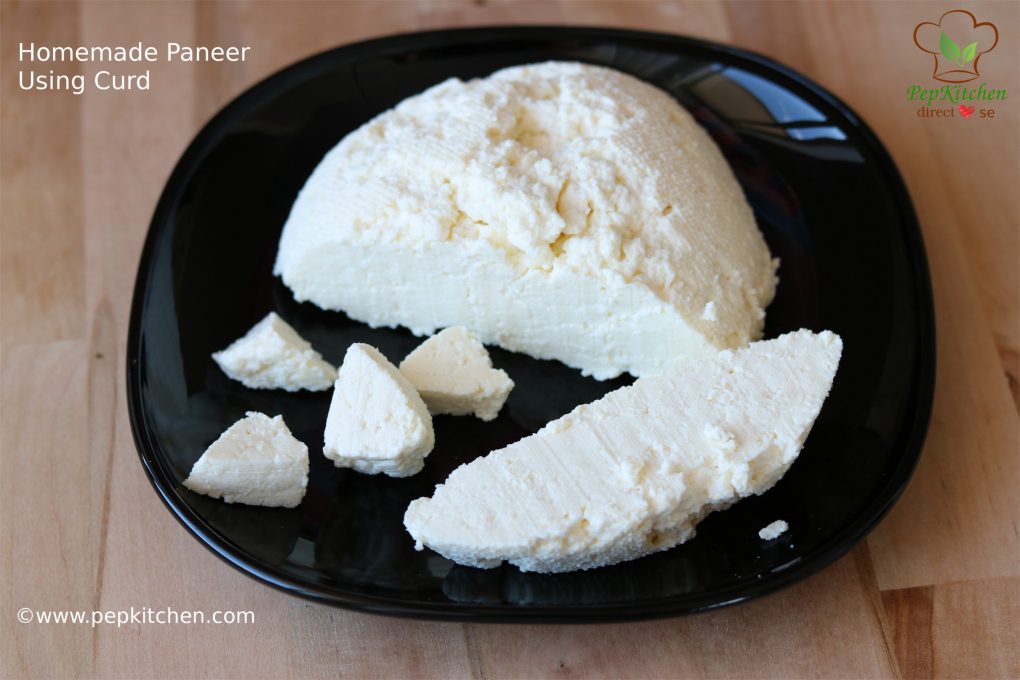
Homemade Paneer Using Curd (Cottage Cheese)

Homemade paneer using curd

Homemade paneer using curd Paneer(cottage cheese) is the most widely used fresh cheese in Indian recipes. It is very versatile and is used in making tikka, curry, salad, and sweets. Grated paneer can be sprinkled on the dosa, pizza, pasta, or rice.
Paneer is a fresh cheese made by curdling heated milk with any acids such as lemon juice, vinegar, citric acid or curd. This separates thick curd from the whey. The curdled mixture or the thick curd is then strained in a muslin or cheese or soft cloth and the excess water is pressed out. The cloth with the paneer is hung for half hour to remove the excess water. This is the basic way to prepare paneer.

Paneer can be made at home very quickly almost in 30 minutes. Once you start making it at home, you will prefer to make it regularly at home. It is clean, hygienic and made with care.

Paneer made by using curd is softer, creamier and less tangy. I mostly use curd to make paneer. If curd is not available then I will use lemon juice.

I will also share the recipe for paneer made using lemon juice soon.

Few points to take care:

Use full cream milk. (Do not use fat-free milk if you want paneer to cut into pieces if you want to crumble paneer you can go for low-fat milk)

The curd should be whisked nicely before using it. It helps to get smooth paneer.

While adding curd or any acidic agent to the boiling milk, always lower the heat and then add curd or any acidic agents.

Constantly stir the milk after adding the acidic agents or curd so that it does not stick to the bottom.

After the milk is curdled-it will take another 5-7 minutes for it to separate from the whey (greenish water). Immediately strain the curdled mixture to remove excess water. If you keep the curdled mixture more on heat, the paneer set would become chewy.

The paneer would be set in 30 minutes. If you want paneer to set in a block then wrap the curdled mixture in the cloth and shape the mixture to a rectangle and place a heavy weight over it for a couple of hours. It will set in a nice block. You can cut into pieces and use to make tikkas or use in curries.

To retain the freshness, the paneer block is immersed in a bowl of fresh water. This will also help in removing excess sourness from paneer and also make it soft. The paneer kept in water can be refrigerated for 3-4 days, changing the water every 8 hours.

I started making paneer at home after my son was born. I was not satisfied with the cleanliness and the hygienic conditions of the dairy selling the milk products. I do not want Aarav to eat those. Paneer is very healthy and I prefer eating it weekly once or twice. So then I started making it at home.

So friends do try making paneer at home and you will never go to shops to buy it!

Homemade paneer using curd
Print Recipe
4.91 from 11 votes

Homemade Paneer Using Curd (Cottage Cheese)

Homemade paneer (cottage cheese) using curd is the very soft and juicy paneer. It is very easy and made quickly. It can be used to make tikkas, curry, salad, pizza, sandwiches or pasta.
Prep Time5 minutes
Cook Time25 minutes
Total Time30 minutes
Course: Main Dish
Cuisine: Indian
Servings: 4 people
Calories: 331kcal

Ingredients

Instructions

  • Heat milk in a pan. Bring it to boil. Stir in between so that the milk does not get stick at the bottom of the pan.
    Homemade paneer using curd
  • Take curd in a bowl and whisk it till smooth.
    Homemade paneer using curd
  • The milk is boiling. Lower the heat.
    Homemade paneer using curd
  • Add the smoothen curd to the milk. Stir the milk. It will start curdling.
    Homemade paneer using curd
  • After a five minutes, it will be curdled fully and greenish water will be separated.
    Homemade paneer using curd
  • Strain the curdled milk in the strainer kept in a bowl. You can put a soft cloth in the strainer and strain the curdled milk.( I have directly strained in the strainer).
    Homemade paneer using curd
  • The greenish water will be collected in the bowl. It is known as "whey". It is very healthy and nutritious. Utilise it to make buttermilk, kneading dough, making soup, dal or kadhi, making khandvi.
    Homemade paneer using curd
  • The curdled mixture will be collected in the strainer. Put the strainer in another bowl and cover it and keep aside for 30 minutes so that the excess water will be removed. (if you want to make a block then put the curdled mixture in soft cloth, squeeze it to remove excess water and then shape it in a rectangle and put a heavy weight over it for a couple of hours. I use it while making paneer with lemon juice.)
    Homemade paneer using curd
  • After 3o minutes, remove the set paneer from the strainer, cut it into pieces and use as required. The paneer made with curd is too soft. Immerse it in a bowl of fresh water and refrigerate to store, Keep changing water after every 8 hours to retain the freshness. The paneer can stay fresh for 3-4 days.
    Homemade paneer using curd
  • Paneer is ready to use.
    Homemade paneer using curd
  • Homemade paneer using curd

Nutrition

Calories: 331kcal | Carbohydrates: 29g | Protein: 21g | Fat: 15g | Saturated Fat: 9g | Polyunsaturated Fat: 1g | Monounsaturated Fat: 4g | Cholesterol: 47mg | Sodium: 272mg | Potassium: 938mg | Sugar: 32g | Vitamin A: 450IU | Vitamin C: 1.7mg | Calcium: 750mg | Iron: 0.2mg

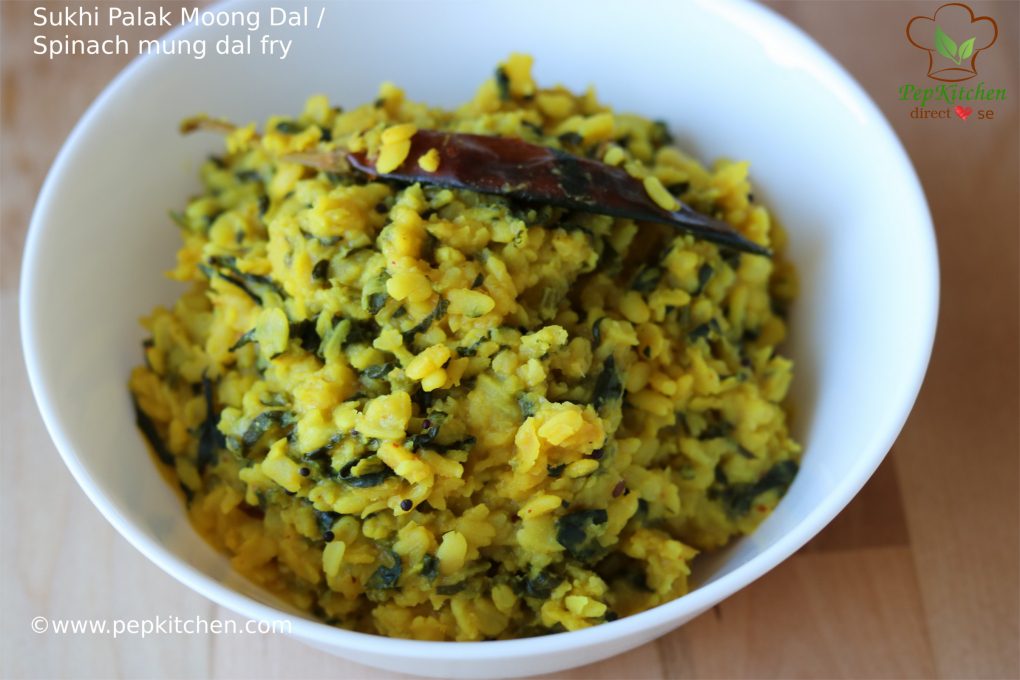
Sukhi Palak Moong Dal/ Spinach Mung Dal Fry

Sukhi Palak Moong Dal/ Spinach Mung Dal Fry

Sukhi palak moong dal/Spinach mung dal fry is a very simple, quick and easy dish. It is the healthy way to get both greens and proteins in a dish. It is made dry and the moong dal is cooked soft but not mushy. It is very light on the stomach and goes well with bhakri, paratha, chapati, chawal ki roti or with plain rice and Gujarati kadhi. It is suitable for Vegan diet.

Sukhi Palak Moong Dal/ Spinach Mung Dal Fry
Print Recipe
5 from 6 votes

Sukhi Palak Moong Dal/ Spinach Mung Dal Fry

Sukhi palak moong dal/Spinach mung dal fry is a very simple, quick and easy dish. It is the healthy way to get both greens and proteins in a dish. It is made dry and the moong dal is cooked soft but not mushy. It is very light on the stomach and goes well with bhakri, paratha, chapati, chawal ki roti or with plain rice and Gujarati kadhi. It is suitable for Vegan diet.
Prep Time15 minutes
Cook Time20 minutes
Total Time35 minutes
Course: Main Dish
Cuisine: Indian
Servings: 2 people
Calories: 224kcal

Ingredients

Instructions

  • Heat oil in a pan. Add mustard seeds, cumin seeds, cinnamon stick, cloves, dry red chili, and asafoetida. Let them crackle.
    Sukhi Palak Moong Dal/ Spinach Mung Dal Fry
  • Add washed and chopped spinach to it. Saute it for a couple of minutes.
    Sukhi Palak Moong Dal/ Spinach Mung Dal Fry
  • Once the spinach starts to soften, add turmeric powder and ginger garlic paste. If you want you can add chopped or crushed green chili. Saute for two minutes.
    Sukhi Palak Moong Dal/ Spinach Mung Dal Fry
  • Add coriander cumin seed powder and red chili powder and saute for a minute.
    Sukhi Palak Moong Dal/ Spinach Mung Dal Fry
  • Add the soaked yellow moong dal with water. Add salt as per taste. Mix well. Let it come to boil.
    Sukhi Palak Moong Dal/ Spinach Mung Dal Fry
  • Reduce the heat to medium and cover and cook the moong dal. Stir in between.
    Sukhi Palak Moong Dal/ Spinach Mung Dal Fry
  • After 10-15 minute, the moong dal will be soft and cooked. Open the lid and cook the dal uncovered for a minute or till the water is dried. The moong dal should be cooked soft but not mushy.
    Sukhi Palak Moong Dal/ Spinach Mung Dal Fry
  • Serve the sukhi palak moong dal with hot chapati, bhakri, paratha, chawal ki roti or with plain rice and gujarati kadhi.
    Sukhi Palak Moong Dal/ Spinach Mung Dal Fry

Nutrition

Calories: 224kcal | Carbohydrates: 28g | Protein: 12g | Fat: 9g | Saturated Fat: 1g | Polyunsaturated Fat: 4g | Monounsaturated Fat: 3g | Sodium: 360mg | Potassium: 1040mg | Fiber: 9g | Sugar: 3g | Vitamin A: 11800IU | Vitamin C: 51.2mg | Calcium: 200mg | Iron: 7.4mg

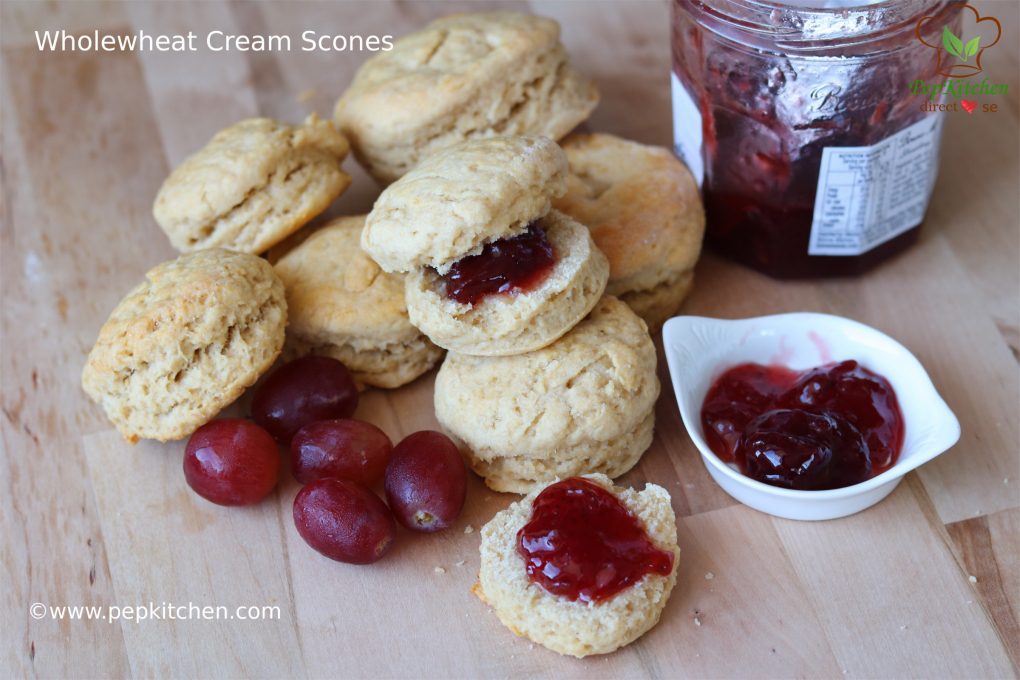
Whole Wheat Cream Scones

Wholewheat cream scones


Wholewheat cream scones I heard of “Scones” when I came to Sydney. They are a single serve dish, similar to bread or cake, but not made with yeast and are less sweet. They are very quick to make and are made with flour, fat and leavening agents. They are then placed on a baking tray and baked until golden. They are served with morning or afternoon tea. They are also served in the bakeries and coffee houses. They can be sweet or savory.  Traditionally scones are served with jam and clotted cream topping.

I have never tasted them in the bakeries or coffee joints. My husband had tasted it when he first visited Sydney and he loved them. I love baking and so wanted to try them at home. Scones are made with chilled butter and milk mix with flour. I had heavy cream at home and so just thought of making scones using it. I googled some recipe using heavy cream. Some recipies had cream and also butter and milk. I first tried them with all-purpose flour and heavy cream. I did not add any butter. The scones came out good.

So this time I wanted to make sones with heavy cream but whole wheat flour. The scones were soft, flaky and have risen well.

Few points to take care of while making scones:

The heavy cream and milk should be chilled.

The flour, salt, and baking powder should be sifted well.

After mixing the heavy cream and milk to the sifted flour mixture, just gently bring them together with a flat spatula. Then transfer the mixture to the working surface dusted with flour and with your hands gather the mixture gently to form a mass. Do not knead it like making a dough for bread.

Lamination of dough – After the dough is gathered like a mass,  pat and spread it gently to form a rectangle. Then fold from one edge to the middle and similarly fold another edge to the center. Fold as if you are wrapping something.  Turn the folded dough. Now again pat and spread it to make a rectangle and again fold both the edges to the center. Again turn the dough repeat the above procedure for one more time. This is known as laminating the dough. It is often practiced while making puff pastry or croissant. This helps in getting flaky layers in the pastry. So if we use it while making scone, it would bake up lighter and rise up well.  I follow this procedure and the result is good scones.

After this pat and press the dough into a rectangle. It should be kept thick. With a help of cutter cut the scones. The cutter should be immersed in flour before using it as this helps in removing the cut scone easily without twisting it. Twisting the flour again would inhibit the rise of scone.

The scones are then placed in the baking tray lined with baking paper. It is given egg wash over the top. Brush it gently on top avoiding the mixture to touch to the sides of the scones. This will hinder the process of rising of scone while baking. I have given the cream and milk wash.

These few points will help you in making a good light and fluffy scone.

The sones can be refrigerated for a week. Warm it lightly in a microwave or oven before serving. It also can be frozen for a couple of months.

You can add dried fruits such as raisins, black currants, apricots, cranberry, sultanas, dried berries for variations in making the scone.

For savory scones, use cheese and herbs.

Sometimes instead of cutting individual scones, the dough is pressed into a circle and then cut into triangle wedges like a pizza and baked.

I have served it with jam and grapes. You can serve with clotted cream, whipped cream, mascarpone cheese, cream cheese or any cream of your choice.

Wholewheat cream scones
Print Recipe
4.84 from 6 votes

Whole wheat cream scones

Whole wheat cream scone is made using wheat flour and cream. Scones are a single serve dish similar to quick bread or cake but are not made with yeast and are less sweet. They are very quick to make and are made with flour, fat and leavening agents. They are then placed on a baking tray and baked until golden. They are served with morning or afternoon tea. They are also served in the bakeries and coffee houses. They can be sweet or savory.  Traditionally scones are served with jam and clotted cream topping.
Prep Time15 minutes
Cook Time30 minutes
Total Time45 minutes
Course: Breakfast, Snack
Cuisine: Global
Servings: 30 scones
Calories: 102kcal

Ingredients

Instructions

  • Sift together whole wheat flour, self-raising flour, salt and baking powder together.
    Wholewheat cream scones
  • Add sugar and mix well.
    Wholewheat cream scones
  • In a bowl take heavy cream. Add vanilla essence. Mix well.
    Wholewheat cream scones
  • Add cream to the sifted mixture.
    Wholewheat cream scones
  • Mix it gently with a spatula.
    Wholewheat cream scones
  • Add milk to it and mix gently and just get the flour together.
    Wholewheat cream scones
  • Dust the surface with some flour and take the flour mixture on it. Bring the dough gentlty together like a ball. Do not over knead the mixture. It will inhibit in rising of scone while baking and thus result in dense scones.
    Wholewheat cream scones
  • Gently pat and spread the mixture to form a rectangle.
    Wholewheat cream scones
  • Now fold in from edge to center from one side. We are laminating the dough. It is like we do for making puff pastry sheets or croissant. lamination of dough will help in getting good flaky layers.
    Wholewheat cream scones
  • Fold similarly from the other edge to the center. Again press and spread the mixture to form a rectangle and repeat the process of folding the edges to center as above. Repeat this for one more time. Folding the edges helps into getting layered and flaky scones.
    Wholewheat cream scones
  • Now after folding two - three times, pat and press gently to form a rectangle of 2 inch thickness.
    Wholewheat cream scones
  • With the help of cutter or small round bottle cut the scones. Rub the cutter with flour before cutting. The cutter should not be twisted while cutting. This again inhibits in rising of the scones.
    Wholewheat cream scones
  • Place the scones in the baking tray lined with baking paper. Brush the top with cream or milk. or cream and milk mixture.
    Wholewheat cream scones
  • Bake the scones @ 190 C for 20-22 minutes or till golden.
    Wholewheat cream scones
  • Remove the scones and let them cool.
    Wholewheat cream scones
  • Serve the scones with jam and whipped cream and tea or coffee. Slit the scone from middle and put jam and cream over it and have it.
    Wholewheat cream scones

Nutrition

Calories: 102kcal | Carbohydrates: 14g | Protein: 2g | Fat: 4g | Saturated Fat: 2g | Polyunsaturated Fat: 0.2g | Monounsaturated Fat: 1g | Cholesterol: 14mg | Sodium: 79mg | Potassium: 62mg | Fiber: 1g | Sugar: 2g | Vitamin A: 150IU | Vitamin C: 0.1mg | Calcium: 40mg | Iron: 0.7mg

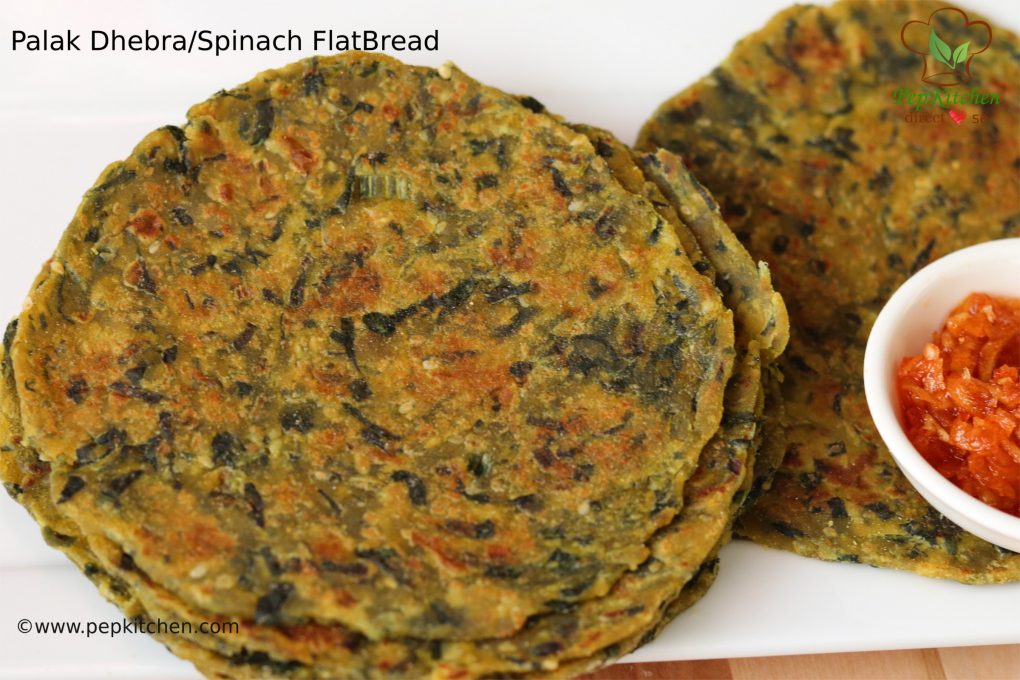
Palak Dhebhra / Spinach Flatbread

Palak Dhebra / Spinach flatbread

Palak Dhebra / Spinach flatbread

Dhebras are a traditional Gujarati dish. There are different types of dhebras such as methi dhebra, dhoodhi (bottlegourd) dhebra, dhana (coriander) dhebra, palak (spinach) dhebra. These are made from different vegetables. They can be also made using different flours like jowar (white millet) flour, bajra (pearl millet ) flour, makkai (maize flour). They are generally thick in size. They can be enjoyed in breakfast, lunch, and dinner. At my place, we use to eat them with a dollop of fresh homemade white butter… and wow that was a nice yummy treat for us. They are a very good option for kids who are fussy eater as they are made with different flour and green vegetables. Whenever we travel we carry methi dhebra, palak dhebra, or dhana dhebra with potato subji and some pickle and buttermilk or curd. These dhebras can stay good for 3-4 days in nice airtight containers. Generally, in Gujarati families, these dhebras are made more during winters when we get good green leaves. During winters we get green garlic leaves and they give a nice flavor to the dhebras.
Palak Dhebra /Spinach flatbread is a very healthy and nutritious dish made by kneading the wheat flour with fresh spinach, ginger garlic paste, sesame seeds. The dough is divided into a ball and rolled in a circle. This is then roasted with oil in a flat pan till golden.

My son loves methi dhebra. Here, in Sydney, getting methi is very difficult. We do not like the dhebras made with frozen methi leaves. They are not as soft as the ones made with fresh leaves. We grow methi in pots at our place. But we have to wait till it is fully grown and it takes time and my son always asks for them so I try to make it with spinach in the same way as I make methi dhebra. I have already shared the recipe for methi dhebra.

I have followed the same method for making palak dhebra. To get the flavor of methi, I have added pickle masala. Pickle masala contains methi seeds and hence gives a similar taste and spinach gives the green colour. He is happy to eat them. And we are happy too…


Palak Dhebra / Spinach flatbread
Print Recipe
5 from 2 votes

Palak Dhebhra / Spinach Flatbread

Palak Dhebra /Spinach flatbread is a very healthy and nutritious dish made by kneading wheat flour with fresh spinach, ginger garlic paste and sesame seeds. The dough is divided into ball and rolled in a circle. This is then roasted with oil in a flat pan till golden. It is served with subji, choondo, murrabba, curd, raita or with tea. It is a good option while traveling and a healthy option for kids lunch box.
Prep Time15 minutes
Cook Time30 minutes
Total Time45 minutes
Course: Breakfast, dinner, Main Dish
Cuisine: Gujarati, Indian
Servings: 14 dhebra
Calories: 143kcal

Ingredients

Instructions

  • In a broad flat vessel take the washed and finely chopped palak/spinach.
    Palak Dhebra / Spinach flatbread
  • Add pickle masala, asafoetida (hing), turmeric powder (haldi), ginger garlic paste, sugar, oil, sesame seeds.
    Palak Dhebra / Spinach flatbread
  • Mix well with hands. (This step is important. While mixing the mixture with hands, the water is released from the spinach. It makes it soft. After all the water is released, add flour. Flour should only be added till it is absorbed by water. This way the propoortion of spinach will be more and the dhebra would look green and softer ).
    Palak Dhebra / Spinach flatbread
  • Add the chickpea flour (besan)
    Palak Dhebra / Spinach flatbread
  • Add wheat flour and salt.
    Palak Dhebra / Spinach flatbread
  • Mix well. The water is absorbed by flour.
    Palak Dhebra / Spinach flatbread
  • If you feel the mixture dry then add little curd to it.
    Palak Dhebra / Spinach flatbread
  • Mix well and knead into a semi tight dough. Apply oil to smoothen dough.
    Palak Dhebra / Spinach flatbread
  • Smoothen the dough and cover and keep aside for 5 minutes.
    Palak Dhebra / Spinach flatbread
  • Make 14 -15 balls from the dough. Flatten and dust the ball with flour.
    Palak Dhebra / Spinach flatbread
  • Roll it into a 10 cm circle with 2 mm thickness.
    Palak Dhebra / Spinach flatbread
  • Heat the flat pan. Put the rolled dhebra on it. The bubbles will start appearing. The heat should be medium.
    Palak Dhebra / Spinach flatbread
  • Flip the dhebra. Increase the heat to high. Apply and spread oil on the dhebra.
    Palak Dhebra / Spinach flatbread
  • Flip it on another side.
    Palak Dhebra / Spinach flatbread
  • Press and roast the dhebra and cook till golden spots appear on both the sides.
    Palak Dhebra / Spinach flatbread
  • The dhebra is cooked. Similarly, make and cook the other dhebra.
    Palak Dhebra / Spinach flatbread
  • Serve the dhebra hot.
    Palak Dhebra / Spinach flatbread
  • Palak dhebra can be served with any vegetable with curry, potato sukhi bhaji, raita, plain curd, mango choondo or pickle or chutney, soup. It is enjoyed also with a cup of tea for morning breakfast. You can also pack dhebra with choondo or pickle while travelling.
    Palak Dhebra / Spinach flatbread

Nutrition

Calories: 143kcal | Carbohydrates: 16g | Protein: 4g | Fat: 8g | Saturated Fat: 1g | Polyunsaturated Fat: 4g | Monounsaturated Fat: 3g | Cholesterol: 0.1mg | Sodium: 19mg | Potassium: 193mg | Fiber: 3g | Sugar: 2g | Vitamin A: 1700IU | Vitamin C: 6.6mg | Calcium: 30mg | Iron: 1.4mg

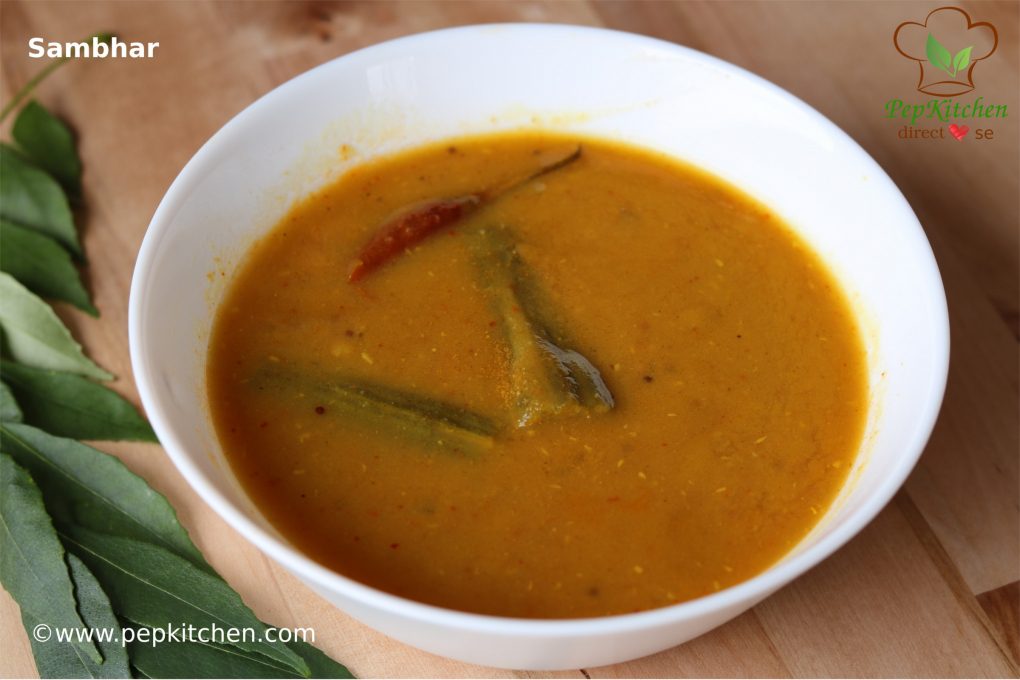
Sambhar

Sambhar


Idli With Idli Rava, Sambhar, Chutney

Sambhar is a very popular dish made regularly in South Indian houses. It is very healthy and nutritious. It is protein rich and packed with the goodness of assorted veggies such as bottle gourd, drumstick, pumpkin, brinjal, potato, okra or beans. It can be made by using all the veggies or in a combination of one or two.  It is served along with idli, dosa, uttapam, upma, wada, paniyaram or rice. It can be enjoyed in breakfast, lunch or dinner.

I am sharing with you the step by step video of the sambhar I cook at my home.

It is very easy, quick and delicious. I pressure cook the veggies(bottle gourd & tomato) along with tuvar dal and then blend them smooth.  This way the veggies are hidden and my son can relish it without any fuss.

I make it with idli or dosa and is loved by all.   My son enjoys singing “garam garam sambhar main doobe idli”(idli sunk in hot sambhar) and will eat them all.

I have served the hot sambhar with idli made with idli rava and coconut curry leaves chutney.

Sambhar
Print Recipe
5 from 2 votes

Sambhar

Sambhar is a very popular South Indian dish made by cooking lentil (tuvar dal-pigeon peas) with vegetables such as bottle gourd, drumstick, brinjal, pumpkin, potato, okra or beans, spices, sambhar powder, curry leaves and tamarind. It is very nutritious and can be had for breakfast, lunch or dinner. It is served as an accompaniment with idli, dosa, upma, uttapam, wada, paniyaram or steam rice.
Prep Time15 minutes
Cook Time25 minutes
Total Time40 minutes
Course: Breakfast, Main Dish
Servings: 6 people
Calories: 214kcal

Ingredients

Instructions

  • In a pressure cooker add the washed and drained tuvar dal.
    Sambhar
  • Add chopped bottle gourd, chopped tomato and grated ginger to it. Add 2 cups of water.
    Sambhar
  • Sambhar
  • Mix well. Close the lid of pressure cooker with whistles. Cook for 4 whistles on high heat and 2 whistles on low heat. Let the pressure released as the cooker cools by itself.
    Sambhar
  • In the meantime, soak the tamarind in water.
    Sambhar
  • After the pressure cooker cools down, remove lid and blend the cooked mixture with a blender till smooth. I also strain the mixture so that the skin of tomatoes are removed.
    Sambhar
  • Heat oil in a big thick bottom pan. Add urad dal and chana dal and roast them till golden. Add mustard seeds, methi seeds, hing, dry red chili and curry leaves. Toss them well.
    Sambhar
  • Add the chopped onion, salt and cook till they are translucent.
    Sambhar
  • Add turmeric powder, coriander cumin powder, sambhar powder and dessicated coconut. Saute till fragnant.
    Sambhar
  • Add drumstick pieces. Mix well. Add water and let it boil till the drumstick soften.
    Sambhar
  • Sambhar
  • Add the blended dal mixture. Mix well.
    Sambhar
  • Add jaggery , salt, mashed and strained tamarind water. Mix well and let the sambhar simmer.
    Sambhar
  • Boil and simmer sambhar for 7-8 minutes. Stir in between.
    Sambhar
  • The sambhar is ready to serve.
    Sambhar
  • Serve it hot with idli, dosa, uttapam, wada, upma, paniyaram or rice.
    Idli With Idli Rava, Sambhar, Chutney

Nutrition

Calories: 214kcal | Carbohydrates: 31g | Protein: 8g | Fat: 6g | Saturated Fat: 2g | Polyunsaturated Fat: 3g | Monounsaturated Fat: 2g | Sodium: 28mg | Potassium: 664mg | Fiber: 6g | Sugar: 8g | Vitamin A: 450IU | Vitamin C: 23.9mg | Calcium: 100mg | Iron: 3.4mg

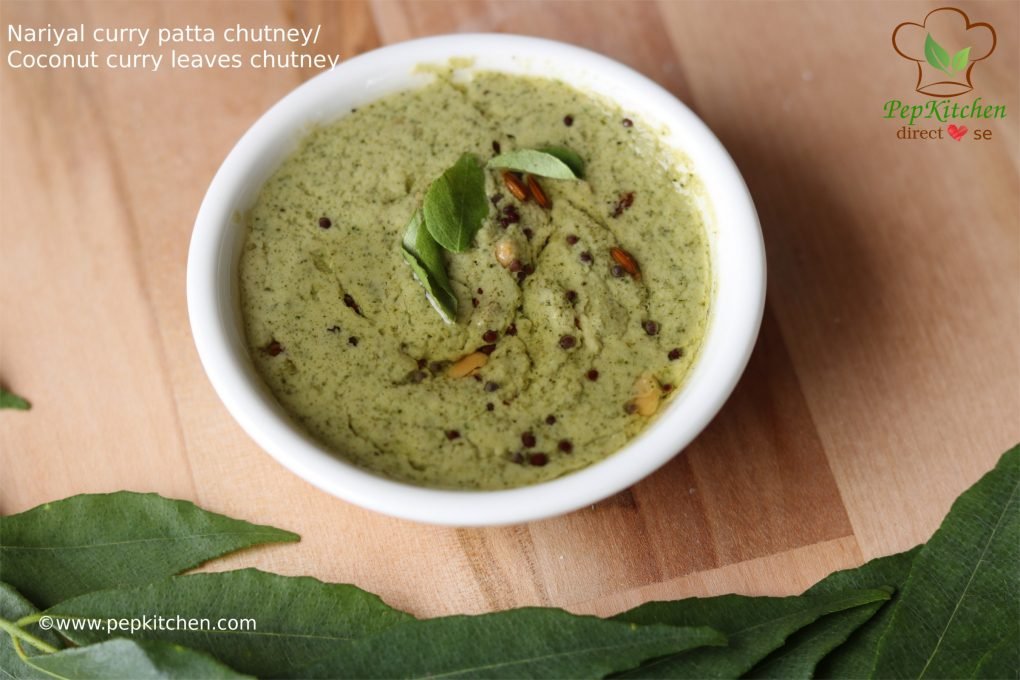
Nariyal Curry Patta Chutney/Coconut Curry Leaves Chutney

Nariyal Curry Patta Chutney/Coconut Curry Leaves Chutney

Nariyal Curry Patta Chutney/Coconut Curry Leaves Chutney

Curry leaves, also known as “Kadhi patta” or “curry patta”, is widely used in Indian dishes. It adds special flavor and aroma to the dish. It has numerous health benefits and is packed with carbohydrates, fiber, calcium, phosphorous, irons, vitamins and folic acid. It is good to include this antioxidant-rich curry leaves in our daily diet. It helps to fight diabetes, lower cholesterol, increases iron in the body and is also good for the healthy growth of hair. Many people boil the curry leaves in coconut oil and then apply to the hair before shampoo. It strengthens the hair, reduces hair fall, increased shine of the hairs and prevents them from greying.

I love to use curry leaves in many of dishes, be it kadhi, potato poha, usal, dal, rice or chutney.

The value of this golden leaf increased for me when I moved to Sydney. I have to buy them from the shops and that too in small quantity. In India, the vegetable vendor would give a bunch of curry leaves complimentary along with the vegetables purchased or we would have the curry leaves planted in our backyards with other plants.

My very good friend Shanthi Krishnan, mother of two super talented kids, marathon and triathlon runner visited us with her family last year. I call her “Superwoman”. We had a very lovely time spent. She saw how I carefully use and treasure the curry leaves in Sydney. She promised me that she would make me a packet of home dried curry leaves when I go to India. She is a South Indian and uses the curry leaves in abundance in her cooking. She tells that she likes to dry the curry leaves and crush them and use them. We generally try to remove the curry leaves while we are eating, hence we do not benefit a whole lot by eating curry leaves this way. Instead, if we use the powdered dried curry leaves in our dal, curry, kadhi, chutney, rice or sambhar, It will go straight in our body similar to Kasuri methi.

When I was returning back to Sydney after my visit to India this year  (Dec 17-Jan 18), Shanthi gave me a big packet of her homemade dried curry leaves at the airport where she came to see us off. I was so happy receiving it and just prayed the whole way that the food officer should clear it at Sydney.

Thank you, Shanthi for the wonderful effort. I am now happily using the curry leaves generously in my dishes.

I like to make coconut chutney with the curry leaves. Usually, I use fresh coconut and fresh curry leaves while making the chutney. This time I made it using the dried curry leaves, desiccated coconut, roasted chana dal or dalia. The chutney came out very tasty and had nice green color.

I make this chutney with idli, dosa, vada, paniyaram or uttapam. Sometimes I like to serve it with dhokla made from mix dal.

Nariyal Curry Patta Chutney/Coconut Curry Leaves Chutney
Print Recipe
4 from 4 votes

Nariyal Curry Patta Chutney/Coconut Curry Leaves Chutney

Nariyal Curry Patta Chutney/Coconut Curry Leaves Chutney is a dip or chutney made in South Indian home with grinding together coconut, curry leaves, and roasted chana dal. A tempering made with oil, urad dal, cumin seeds, mustard seeds and curry leaves is pour over the top of the chutney. It is served with idli, dosa, uttapam, paniyaram, upma, or even dhokla.
Prep Time10 minutes
Cook Time2 minutes
Total Time12 minutes
Course: accompaniments
Servings: 1 bowl
Calories: 1814kcal

Ingredients

Instructions

  • In a mixer jar, grind roasted chanal dal with green chili, ginger and salt to a fine powder.
    Nariyal Curry Patta Chutney/Coconut Curry Leaves Chutney
  • Add the dried curry leaves and desiccated coconut.
    Nariyal Curry Patta Chutney/Coconut Curry Leaves Chutney
  • Grind them together.
    Nariyal Curry Patta Chutney/Coconut Curry Leaves Chutney
  • Add water and grind to a smooth paste. Adjust water as per the consistency required. (some prefer a thick chutney and some prefer it to be thin). The coconut curry leaves chutney is ready. Remove it in a bowl.
    Nariyal Curry Patta Chutney/Coconut Curry Leaves Chutney
  • Prepare the tempering or tadka - Heat oil in a pan. Add urad dal and roast it till golden.
    Nariyal Curry Patta Chutney/Coconut Curry Leaves Chutney
  • Add the cumin seeds and mustard seeds and let they crackle.
    Nariyal Curry Patta Chutney/Coconut Curry Leaves Chutney
  • Add dried red chili and asafoetida.
    Nariyal Curry Patta Chutney/Coconut Curry Leaves Chutney
  • Add curry leaves and saute for a minute.
    Nariyal Curry Patta Chutney/Coconut Curry Leaves Chutney
  • Pour the prepared tempering/Tadka on the chutney.
    Nariyal Curry Patta Chutney/Coconut Curry Leaves Chutney
  • Mix it well. The chutney is ready to serve.
    Nariyal Curry Patta Chutney/Coconut Curry Leaves Chutney
  • Serve it with idli, dosa, upma, uttapam, paniyaram, vada, dhokla.
    Nariyal Curry Patta Chutney/Coconut Curry Leaves Chutney
  • Idli With Idli Rava, Sambhar, Chutney

Nutrition

Calories: 1814kcal | Carbohydrates: 198g | Protein: 27g | Fat: 104g | Saturated Fat: 76g | Polyunsaturated Fat: 8g | Monounsaturated Fat: 9g | Sodium: 1767mg | Potassium: 835mg | Fiber: 35g | Sugar: 106g | Vitamin A: 50IU | Vitamin C: 2.5mg | Calcium: 220mg | Iron: 13.7mg